Herbert Johannes Josef Siebner
(Canadian/German, 1925–2003)
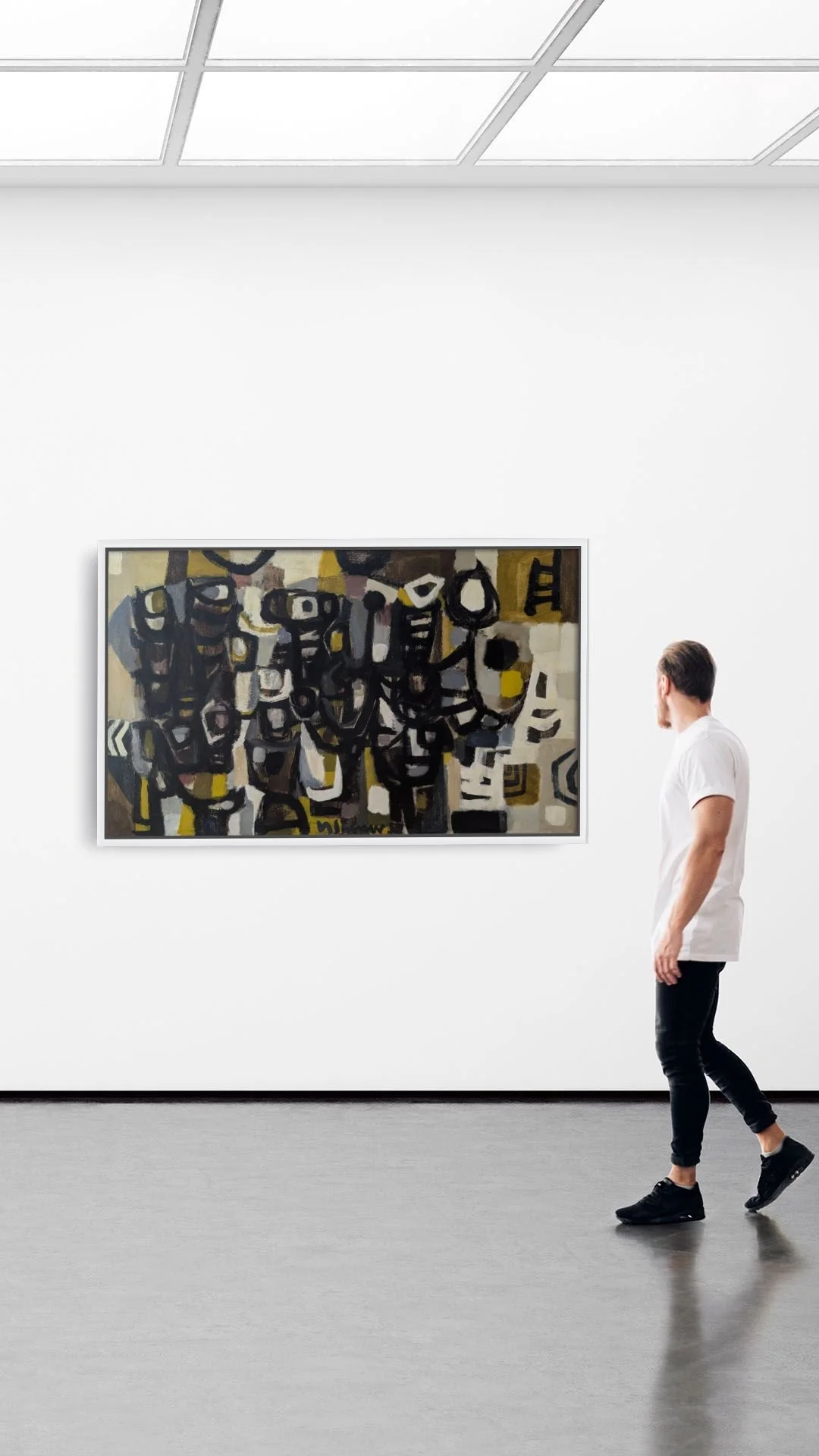
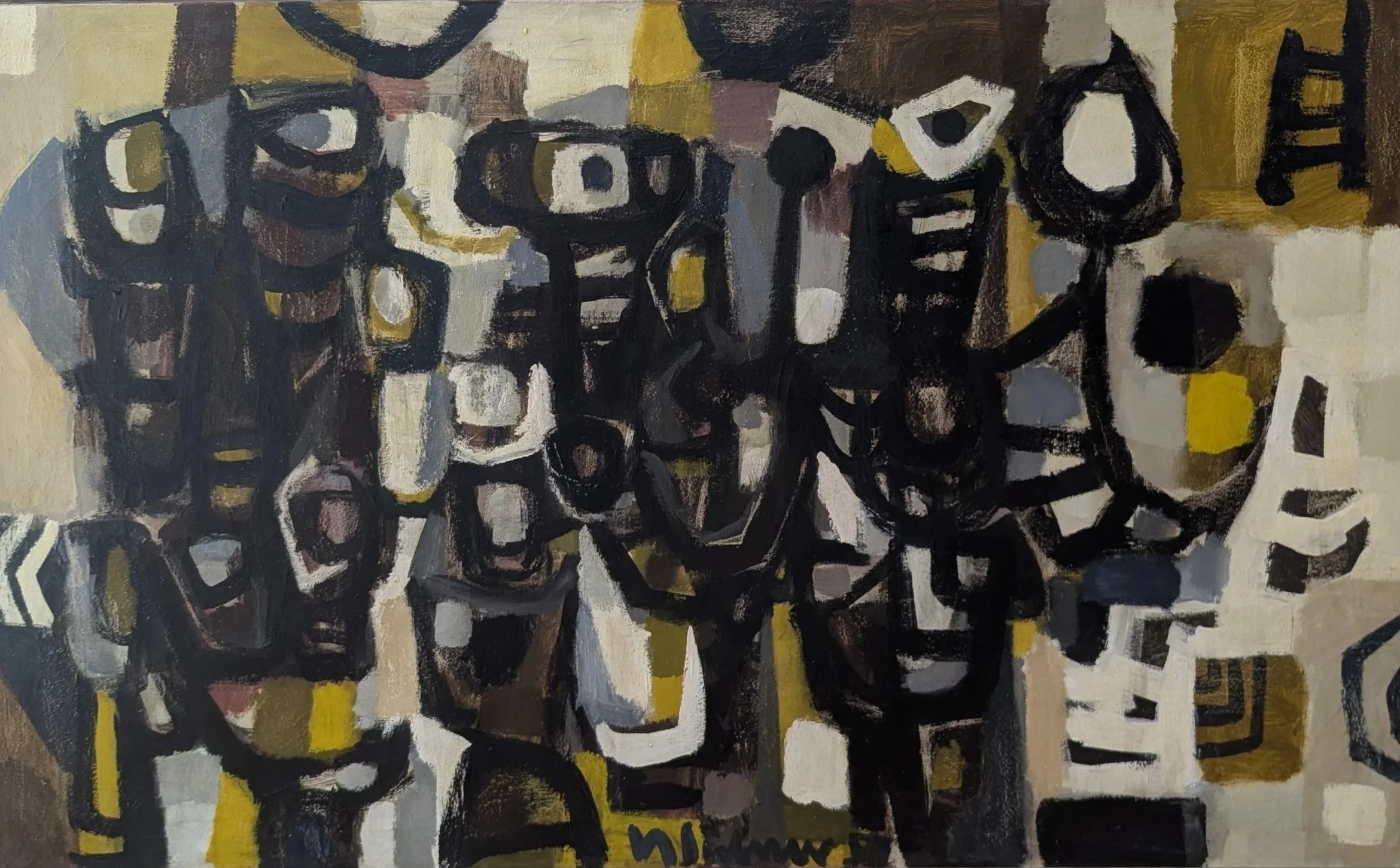
The Eternally Recurring Force
1979
Oil on canvas
Signed "Siebner" lower left
Frame: 46.5 × 63.25 in. (118.1 × 160.7 cm)
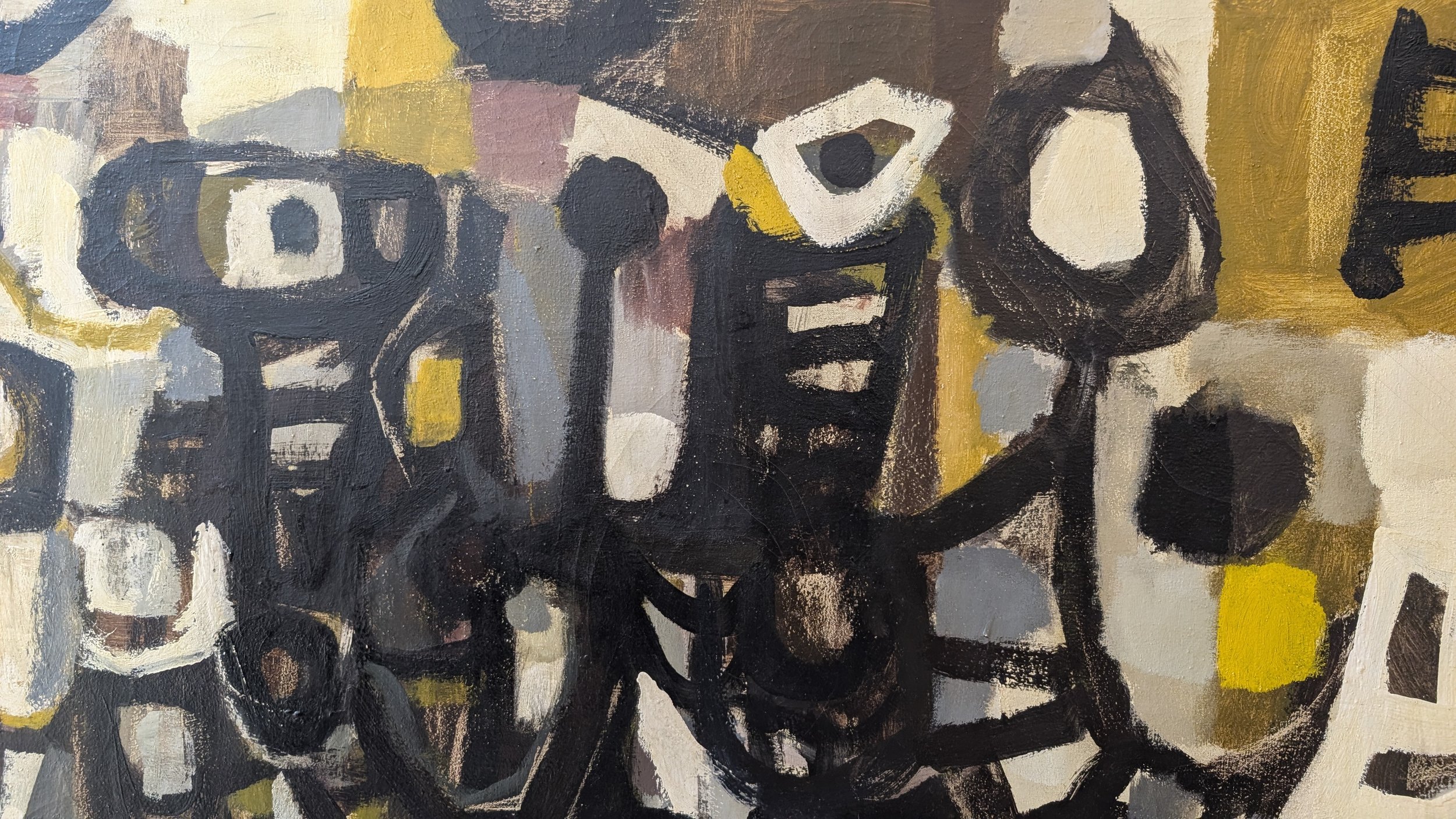
Executed in 1979, The Eternally Recurring Force is a monumental masterwork from Herbert Siebner's mature period, representing one of the largest and most ambitious canvases of his entire five-decade career. Spanning over five feet in width, the composition centers on a massive, arching megalithic form that evokes both an ancient stone monument and a Mother Goddess archetype. Set against a striking tricolor landscape of cobalt blue ocean, warm ochre sand, and a deep sky featuring dual celestial spheres and a black solar disc, the painting captures a profound sense of cosmic order, mythology, and environmental endurance.
The title refers directly to Nietzschean concepts of eternal recurrence and the primal cycles of nature, themes that occupied Siebner throughout his later life. Nestled within the central archway stands a small, dark human silhouette, offering a poignant contrast between human brevity and the eternal forces of the universe. Created in 1979, the same year a major monograph was published on his career, this canvas demonstrates Siebner's ultimate mastery of simplified form, heavy texture, and symbolic storytelling on a scale rarely seen outside of museum collections.
Arriving in Victoria in 1954 after studying under Max Pechstein at the Academy of Fine Arts in Berlin, Siebner is widely credited with helping introduce German Expressionism to Western Canada. In 1971, he co-founded the legendary Victoria Limners Society alongside Maxwell Bates, Myfanwy Pavelic, Karl Spreitz, and Elza Mayhew, creating a vital bohemian collective that transformed the regional art scene. Over his prolific career, Siebner held more than 130 solo exhibitions across North America and Europe.
Major Accolades & Recognition:
Created during the publication year of his major retrospective text Herbert Siebner: A Monograph (1979)
Held over 130 solo exhibitions worldwide during his lifetime
Elected Member, Royal Canadian Academy of Arts (R.C.A., 1973)
Co-Founder and President, The Victoria Limners Society (1971)
Recipient, Canada Council Senior Arts Fellowship Grant (1962)
Canadian National Award in Graphic Arts (1956)
Canadian Centennial Medal Recipient (1967)
Retrospective & Solo Exhibitions, Art Gallery of Greater Victoria (1955, 1961, 1965, 1970, 1984, 2003)
Selected Permanent Collections:
National Gallery of Canada (Ottawa, ON)
Vancouver Art Gallery (Vancouver, BC)
Art Gallery of Greater Victoria (Victoria, BC)
Royal Ontario Museum (Toronto, ON)
Collection of Princess Fernanda von Thurn und Taxis
City of Berlin Collection (Berlin, Germany)
Confederation Centre Art Gallery (Charlottetown, PEI)
Seattle Art Museum (Seattle, WA)
University of Victoria Archives & Special Collections (Victoria, BC)
Feckless Collection (Vancouver, BC)
Herbert Johannes Josef Siebner
(Canadian/German, 1925–2003)
The Eternally Recurring Force
1979
Oil on canvas
Signed "Siebner" lower left
Frame: 46.5 × 63.25 in. (118.1 × 160.7 cm)
Executed in 1979, The Eternally Recurring Force is a monumental masterwork from Herbert Siebner's mature period, representing one of the largest and most ambitious canvases of his entire five-decade career. Spanning over five feet in width, the composition centers on a massive, arching megalithic form that evokes both an ancient stone monument and a Mother Goddess archetype. Set against a striking tricolor landscape of cobalt blue ocean, warm ochre sand, and a deep sky featuring dual celestial spheres and a black solar disc, the painting captures a profound sense of cosmic order, mythology, and environmental endurance.
The title refers directly to Nietzschean concepts of eternal recurrence and the primal cycles of nature, themes that occupied Siebner throughout his later life. Nestled within the central archway stands a small, dark human silhouette, offering a poignant contrast between human brevity and the eternal forces of the universe. Created in 1979, the same year a major monograph was published on his career, this canvas demonstrates Siebner's ultimate mastery of simplified form, heavy texture, and symbolic storytelling on a scale rarely seen outside of museum collections.
Arriving in Victoria in 1954 after studying under Max Pechstein at the Academy of Fine Arts in Berlin, Siebner is widely credited with helping introduce German Expressionism to Western Canada. In 1971, he co-founded the legendary Victoria Limners Society alongside Maxwell Bates, Myfanwy Pavelic, Karl Spreitz, and Elza Mayhew, creating a vital bohemian collective that transformed the regional art scene. Over his prolific career, Siebner held more than 130 solo exhibitions across North America and Europe.
Major Accolades & Recognition:
Created during the publication year of his major retrospective text Herbert Siebner: A Monograph (1979)
Held over 130 solo exhibitions worldwide during his lifetime
Elected Member, Royal Canadian Academy of Arts (R.C.A., 1973)
Co-Founder and President, The Victoria Limners Society (1971)
Recipient, Canada Council Senior Arts Fellowship Grant (1962)
Canadian National Award in Graphic Arts (1956)
Canadian Centennial Medal Recipient (1967)
Retrospective & Solo Exhibitions, Art Gallery of Greater Victoria (1955, 1961, 1965, 1970, 1984, 2003)
Selected Permanent Collections:
National Gallery of Canada (Ottawa, ON)
Vancouver Art Gallery (Vancouver, BC)
Art Gallery of Greater Victoria (Victoria, BC)
Royal Ontario Museum (Toronto, ON)
Collection of Princess Fernanda von Thurn und Taxis
City of Berlin Collection (Berlin, Germany)
Confederation Centre Art Gallery (Charlottetown, PEI)
Seattle Art Museum (Seattle, WA)
University of Victoria Archives & Special Collections (Victoria, BC)
Feckless Collection (Vancouver, BC)


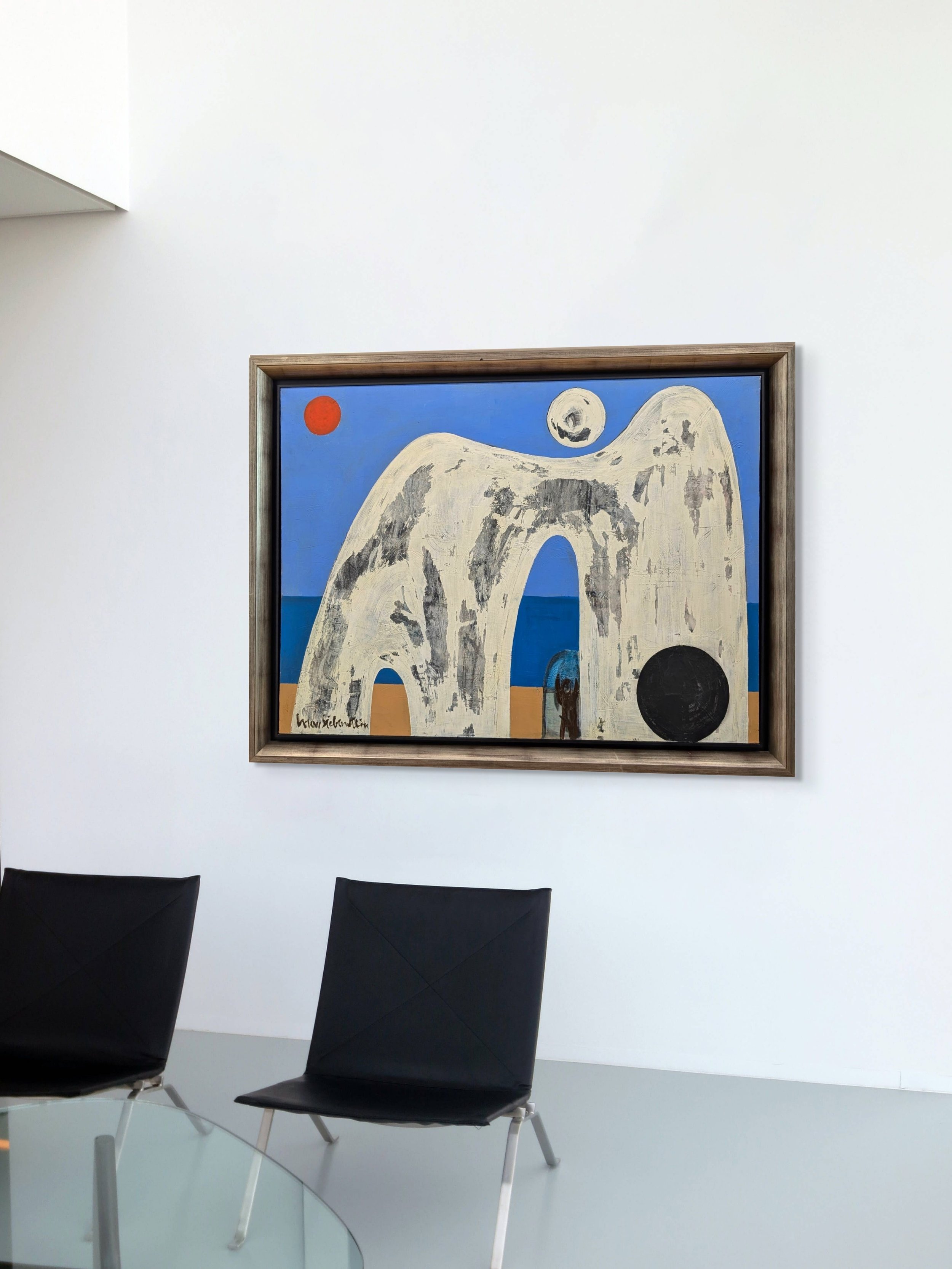 Image 1 of 6
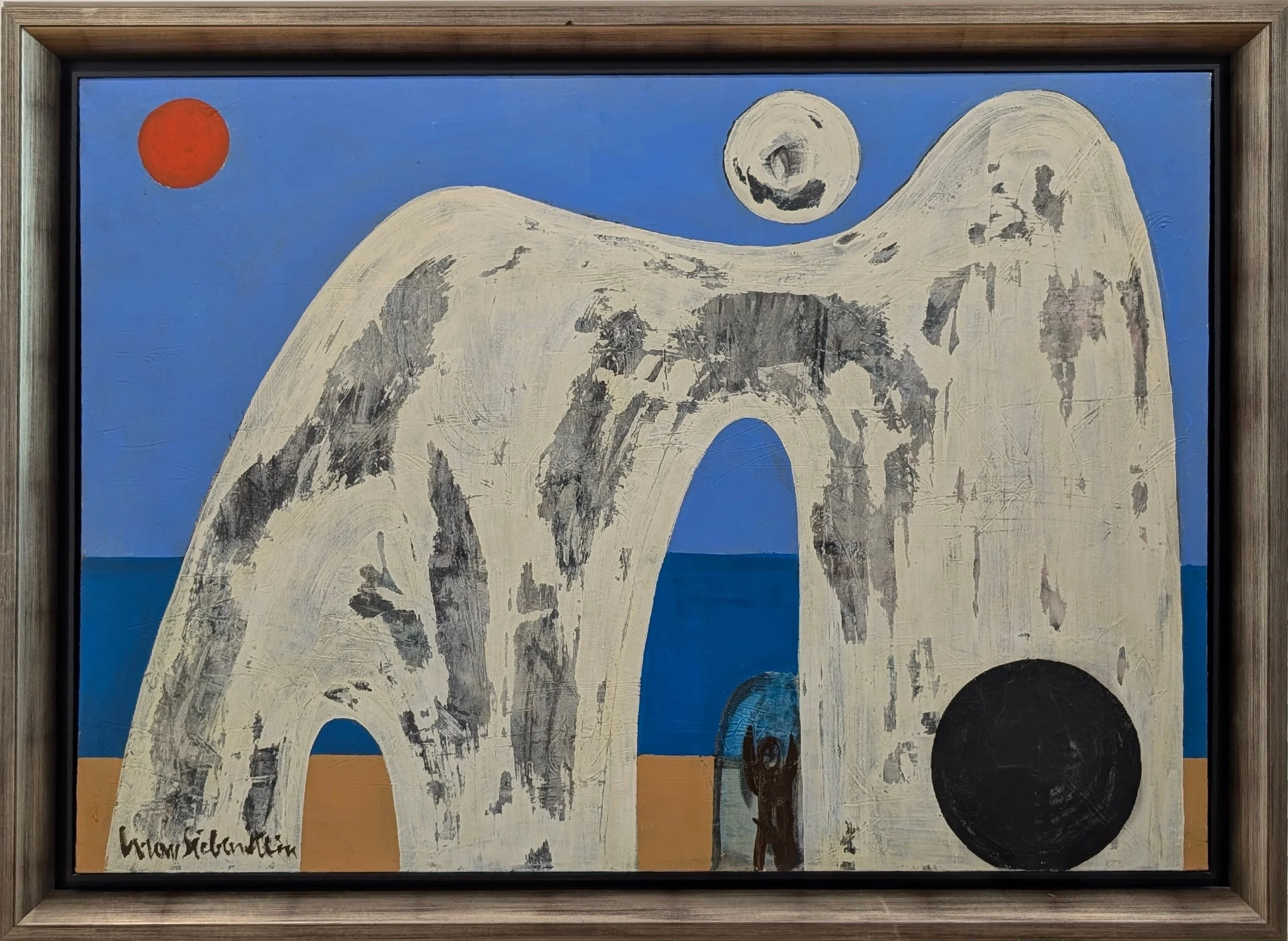 Image 2 of 6
 Image 3 of 6
 Image 4 of 6
 Image 5 of 6
 Image 6 of 6