

 Image 1 of 4
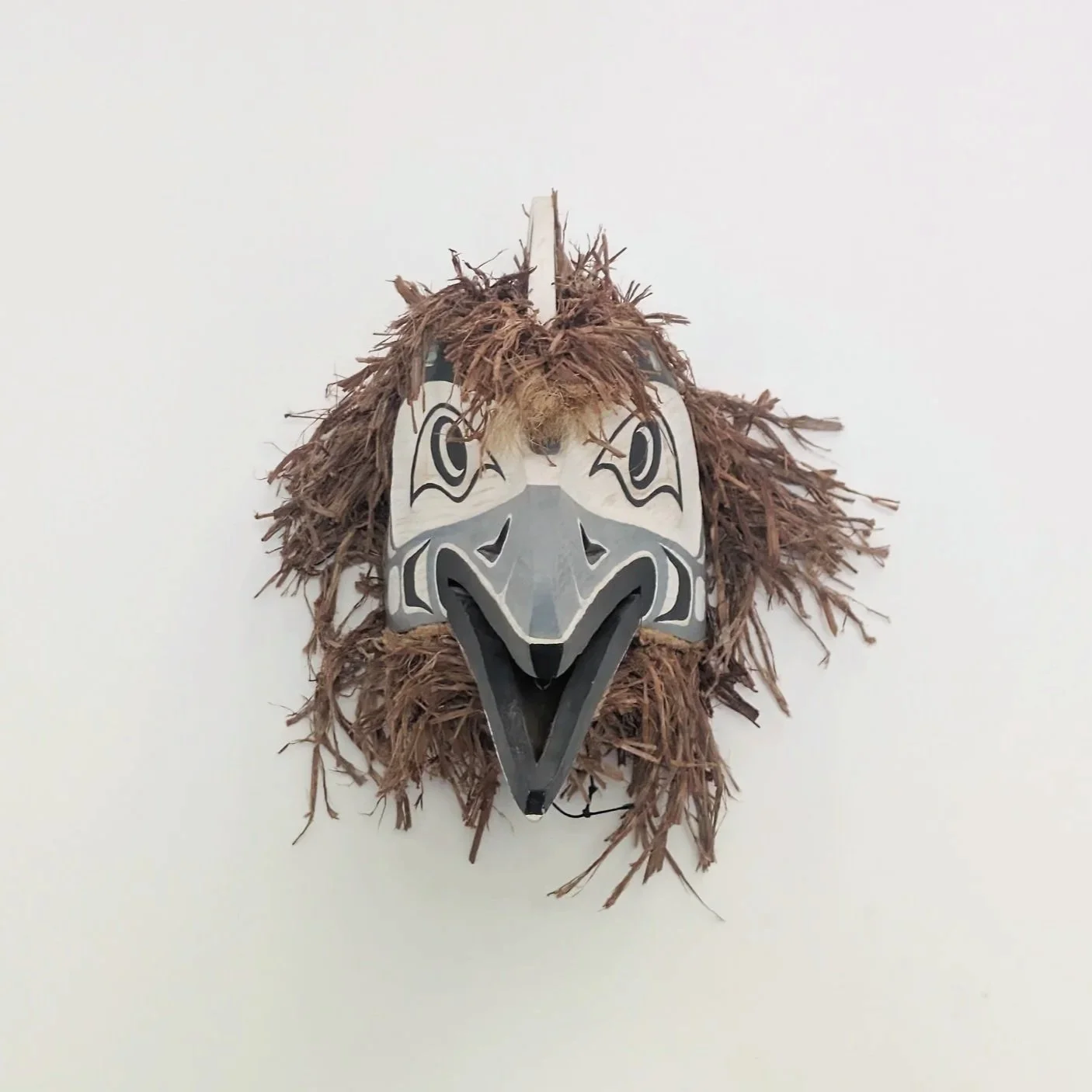 Image 2 of 4
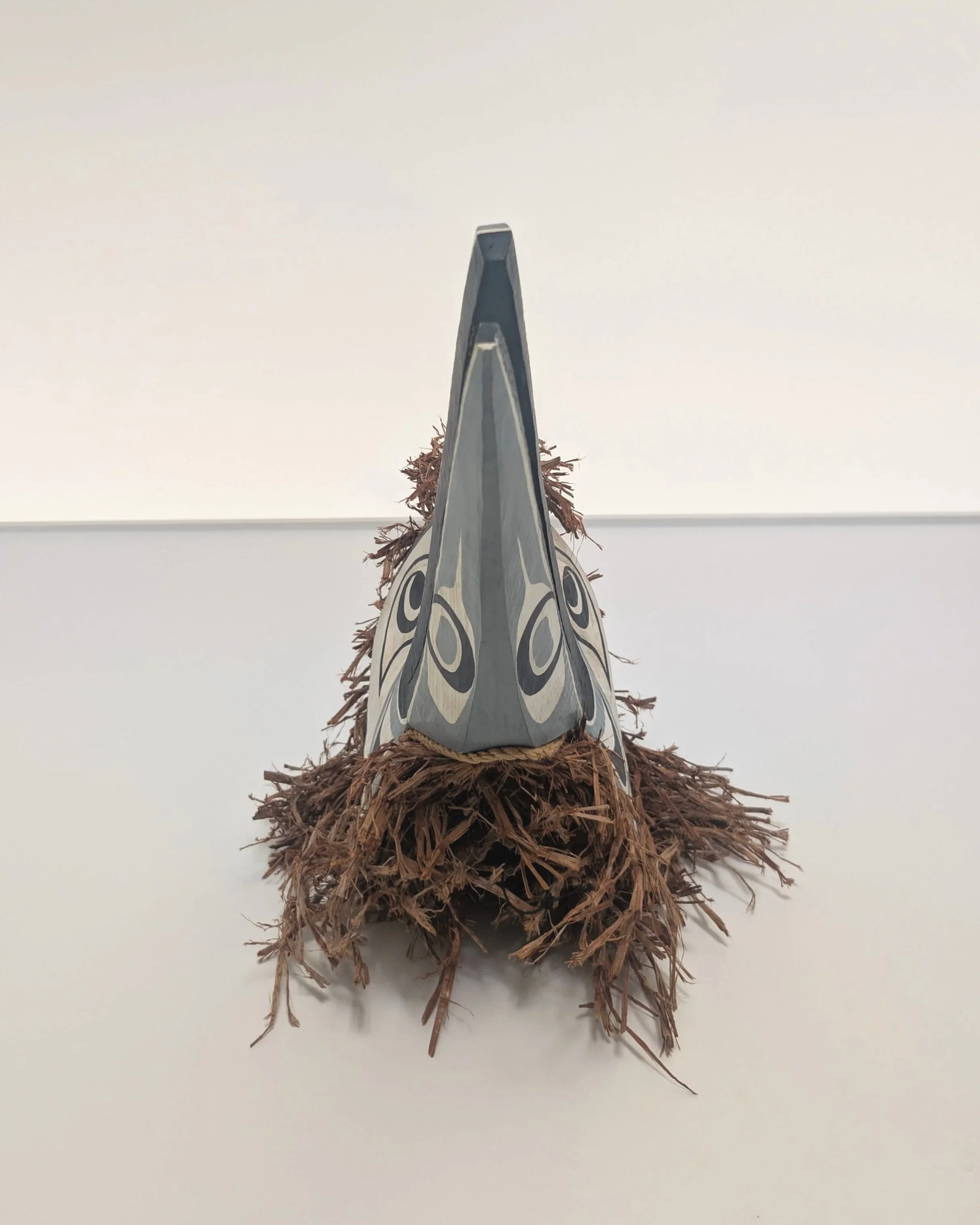 Image 3 of 4
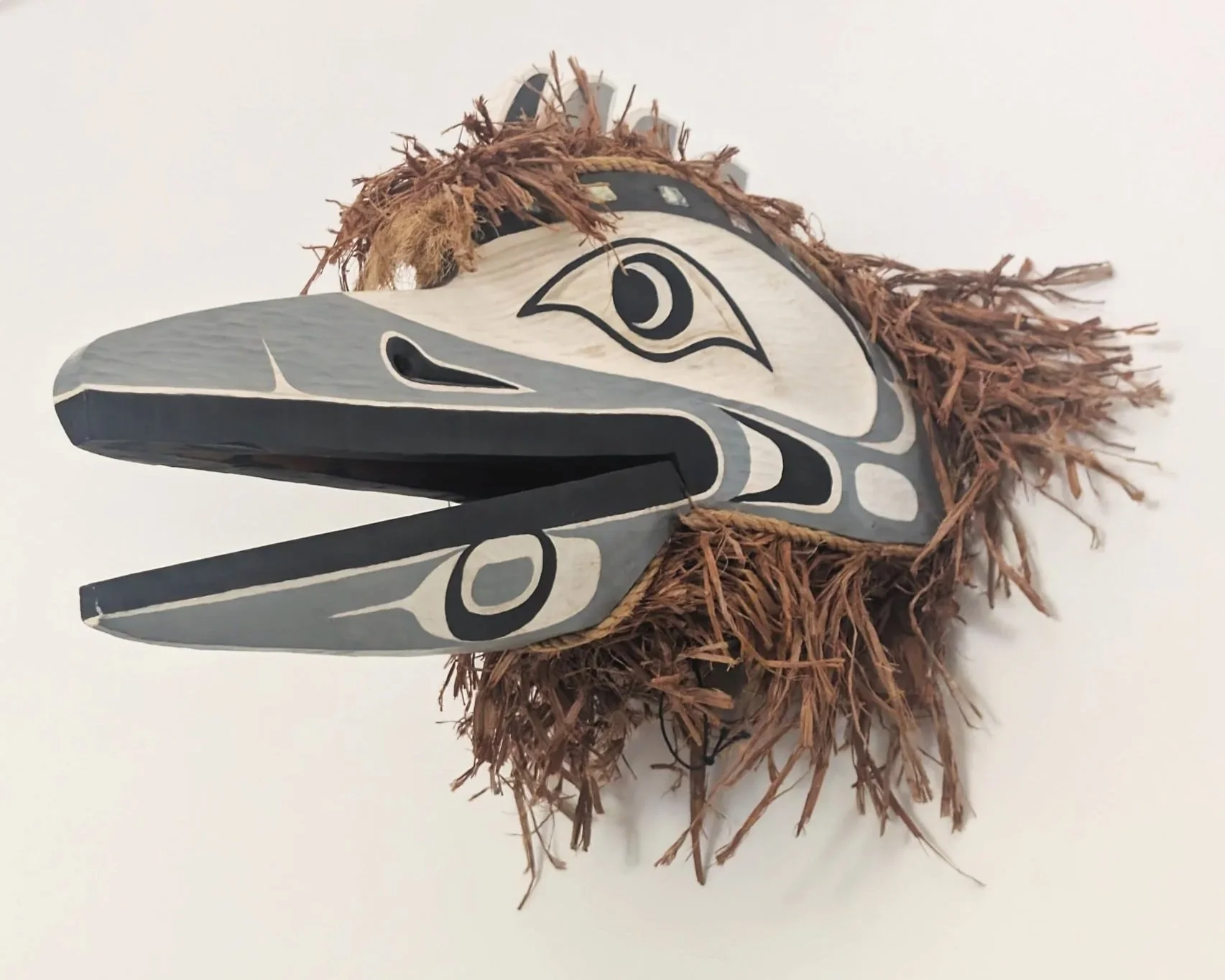 Image 4 of 4
Beau Dick
(Kwakwaka'wakw, 1955–2017)
Kingfisher Mask
1998
Carved red cedar, acrylic paint, shredded red cedar bark, and abalone shell inlay
Hand-signed, titled, and dated by the artist (verso)
27 × 11.5 × 10 in. (68.6 × 29.2 × 25.4 cm)
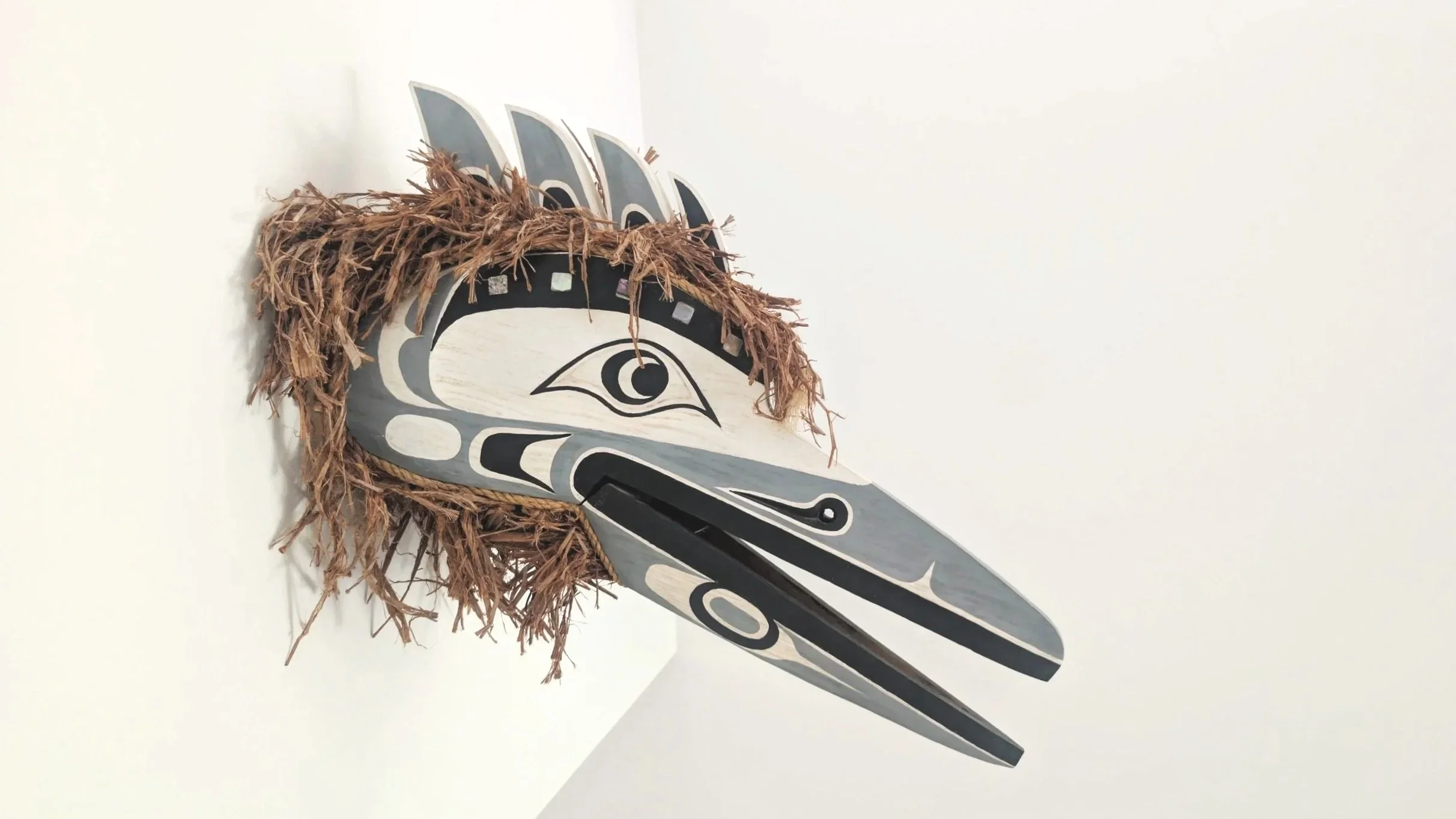
Carved in 1998, this Kingfisher Mask by Chief Beau Dick (Walas Gwayum) exemplifies the artist's legendary command of Kwakwaka'wakw sculptural forms and traditional crest iconography. The mask features the kingfisher's characteristic elongated beak, dynamic crest fins, and crisp formline features painted in a sophisticated palette of slate grey, black, and natural unpainted cedar. The upper crown is elevated with square inlays of iridescent abalone shell, while a lush fringe of shredded red cedar bark surrounds the head, imbuing the sculpture with ceremonial vitality and tactile richness.
In Kwakwaka'wakw culture, the Kingfisher is celebrated as a swift, precise hunter and a symbol of patience, instinct, and prosperity. Beau Dick was renowned for bridging the sacred world of potlatch ceremonialism with contemporary fine art, carving masks that were not merely decorative objects, but living vessels infused with spiritual presence. Executed during a pivotal period of his mature artistic career in 1998, this work demonstrates his mastery of traditional Northwest Coast carving rules combined with a bold, expressive hand.
Chief Beau Dick is widely celebrated as one of the most visionary and influential Indigenous artists of the modern era. A hereditary chief of the Namgis First Nation, Dick served as a vital cultural keeper, activist, and master mentor to generations of Northwest Coast carvers. His international career reached its pinnacle with his featured inclusion in documenta 14 in Athens and Kassel (2017), cementing his legacy as a global contemporary art icon who elevated Kwakwaka'wakw ceremonial sculpture onto the world stage.
Major Accolades & Museum Recognition:
Featured Artist, documenta 14 (Athens, Greece & Kassel, Germany, 2017)
VIVA Award Recipient, Jack and Doris Shadbolt Foundation (2012)
Artist-in-Residence, University of British Columbia Department of Art History (2013–2017)
Solo Retrospective Exhibition, Beau Dick: Revolutionary Spirit, Audain Art Museum (2018)
Major US Museum Survey, Beau Dick: Insatiable Beings, Frye Art Museum (2025)
Selected Permanent Collections:
National Gallery of Canada (Ottawa, ON)
Vancouver Art Gallery (Vancouver, BC)
Audain Art Museum (Whistler, BC)
UBC Museum of Anthropology / MOA (Vancouver, BC)
Canadian Museum of History (Gatineau, QC)
Royal British Columbia Museum (Victoria, BC)
The Burke Museum of Natural History and Culture (Seattle, WA)
The Heard Museum (Phoenix, AZ)
Frye Art Museum (Seattle, WA)
Simon Fraser University Galleries (Burnaby, BC)
U'mista Cultural Centre (Alert Bay, BC)
Beau Dick
(Kwakwaka'wakw, 1955–2017)
Kingfisher Mask
1998
Carved red cedar, acrylic paint, shredded red cedar bark, and abalone shell inlay
Hand-signed, titled, and dated by the artist (verso)
27 × 11.5 × 10 in. (68.6 × 29.2 × 25.4 cm)
Carved in 1998, this Kingfisher Mask by Chief Beau Dick (Walas Gwayum) exemplifies the artist's legendary command of Kwakwaka'wakw sculptural forms and traditional crest iconography. The mask features the kingfisher's characteristic elongated beak, dynamic crest fins, and crisp formline features painted in a sophisticated palette of slate grey, black, and natural unpainted cedar. The upper crown is elevated with square inlays of iridescent abalone shell, while a lush fringe of shredded red cedar bark surrounds the head, imbuing the sculpture with ceremonial vitality and tactile richness.
In Kwakwaka'wakw culture, the Kingfisher is celebrated as a swift, precise hunter and a symbol of patience, instinct, and prosperity. Beau Dick was renowned for bridging the sacred world of potlatch ceremonialism with contemporary fine art, carving masks that were not merely decorative objects, but living vessels infused with spiritual presence. Executed during a pivotal period of his mature artistic career in 1998, this work demonstrates his mastery of traditional Northwest Coast carving rules combined with a bold, expressive hand.
Chief Beau Dick is widely celebrated as one of the most visionary and influential Indigenous artists of the modern era. A hereditary chief of the Namgis First Nation, Dick served as a vital cultural keeper, activist, and master mentor to generations of Northwest Coast carvers. His international career reached its pinnacle with his featured inclusion in documenta 14 in Athens and Kassel (2017), cementing his legacy as a global contemporary art icon who elevated Kwakwaka'wakw ceremonial sculpture onto the world stage.
Major Accolades & Museum Recognition:
Featured Artist, documenta 14 (Athens, Greece & Kassel, Germany, 2017)
VIVA Award Recipient, Jack and Doris Shadbolt Foundation (2012)
Artist-in-Residence, University of British Columbia Department of Art History (2013–2017)
Solo Retrospective Exhibition, Beau Dick: Revolutionary Spirit, Audain Art Museum (2018)
Major US Museum Survey, Beau Dick: Insatiable Beings, Frye Art Museum (2025)
Selected Permanent Collections:
National Gallery of Canada (Ottawa, ON)
Vancouver Art Gallery (Vancouver, BC)
Audain Art Museum (Whistler, BC)
UBC Museum of Anthropology / MOA (Vancouver, BC)
Canadian Museum of History (Gatineau, QC)
Royal British Columbia Museum (Victoria, BC)
The Burke Museum of Natural History and Culture (Seattle, WA)
The Heard Museum (Phoenix, AZ)
Frye Art Museum (Seattle, WA)
Simon Fraser University Galleries (Burnaby, BC)
U'mista Cultural Centre (Alert Bay, BC)