Maxwell Bennett Bates

$16,000.00
SOLD

Maxwell Bennett Bates
(Canadian, 1906–1980)
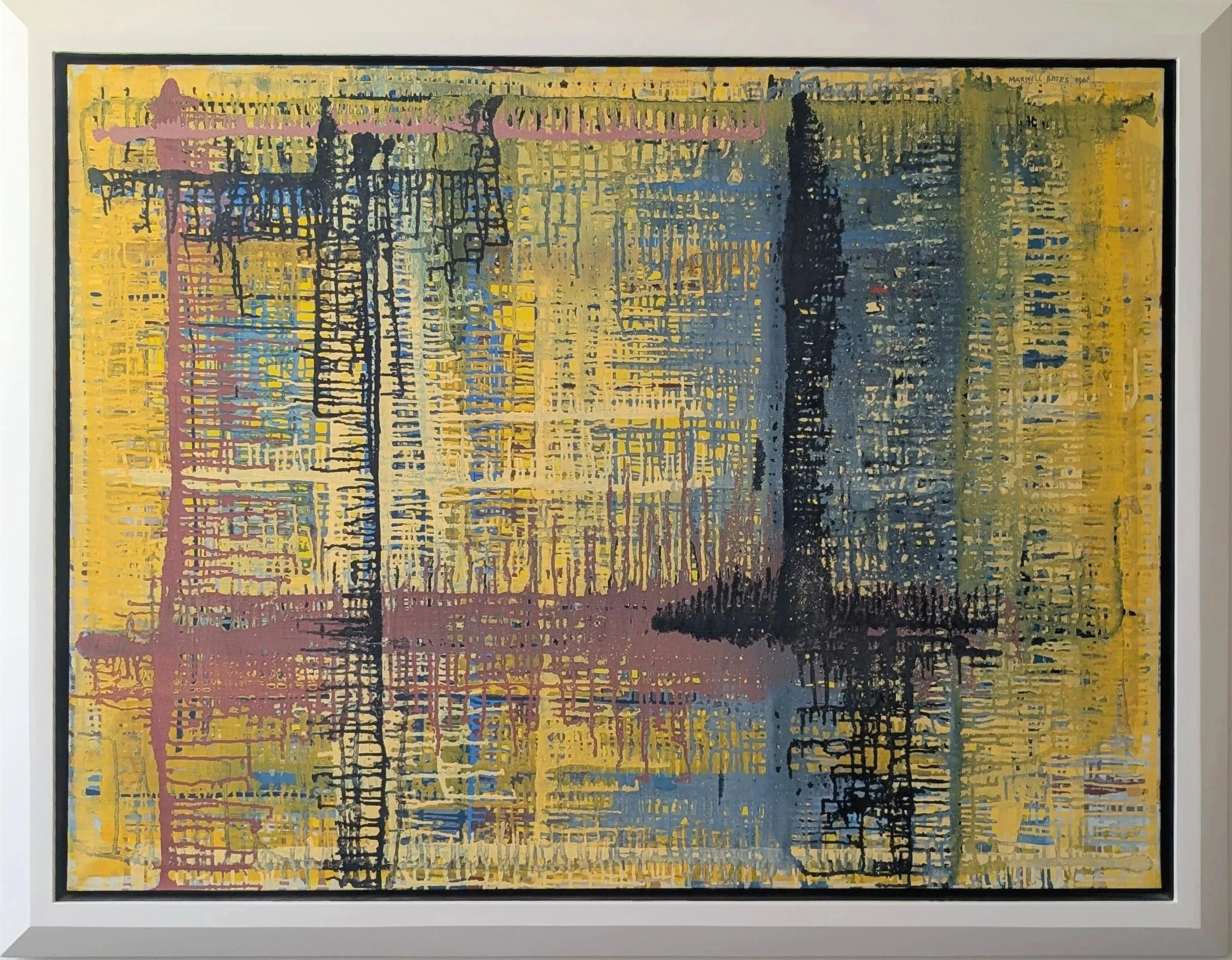
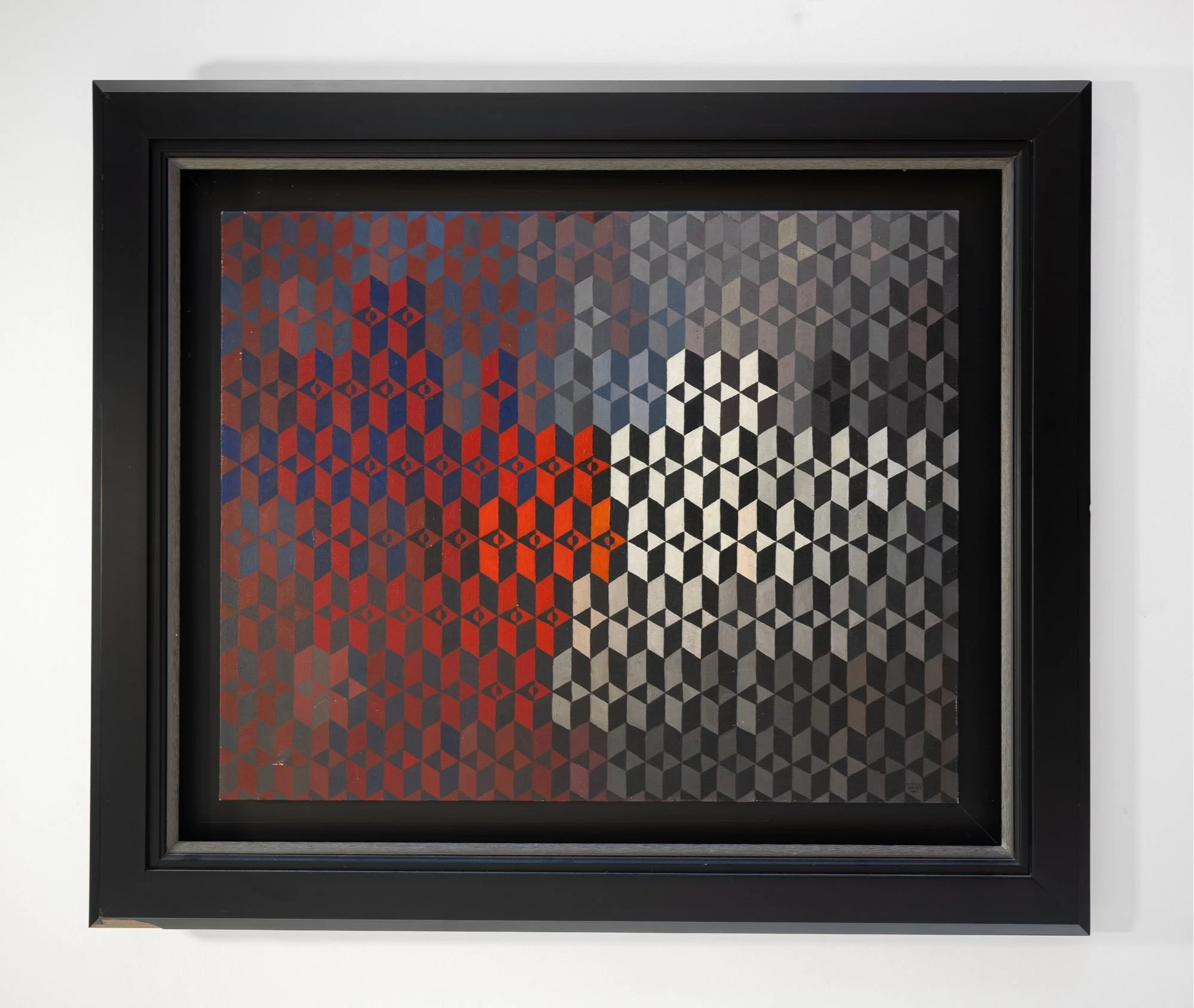
Battle of Mechanics and Poets - Facets Three
1960
Oil on canvas
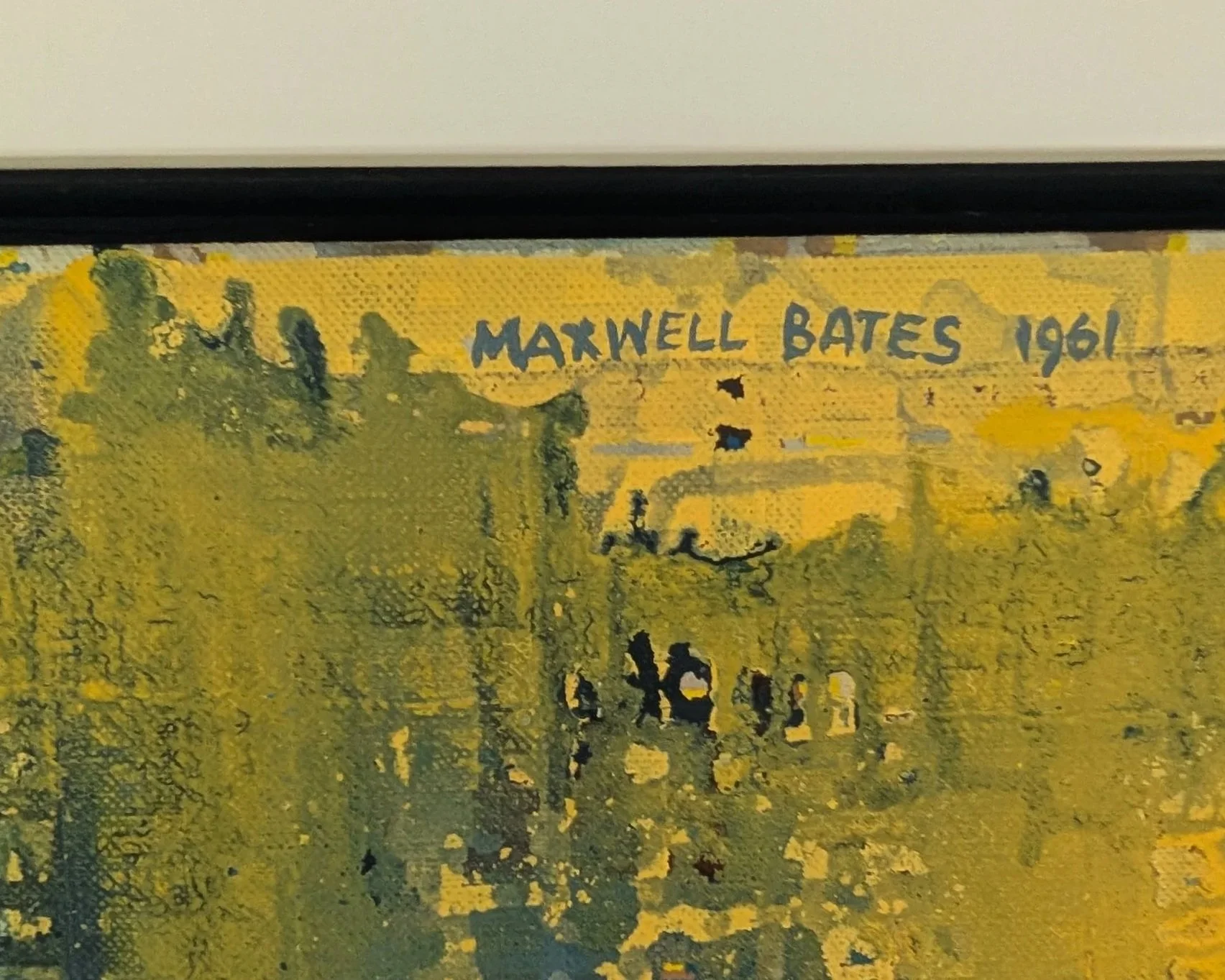
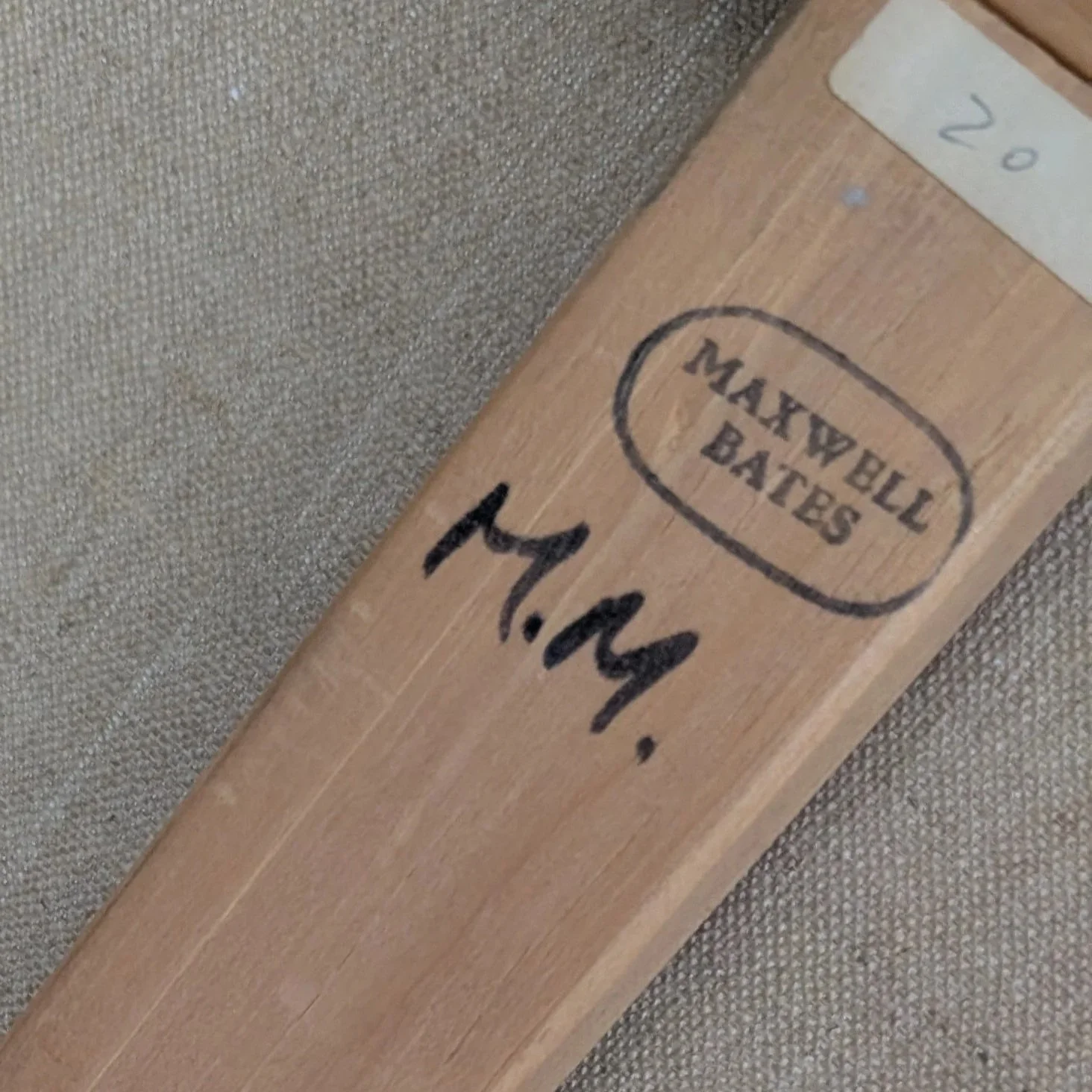
Signed "MAXWELL BATES" lower right
24 × 30 in. (61.0 × 76.2 cm)

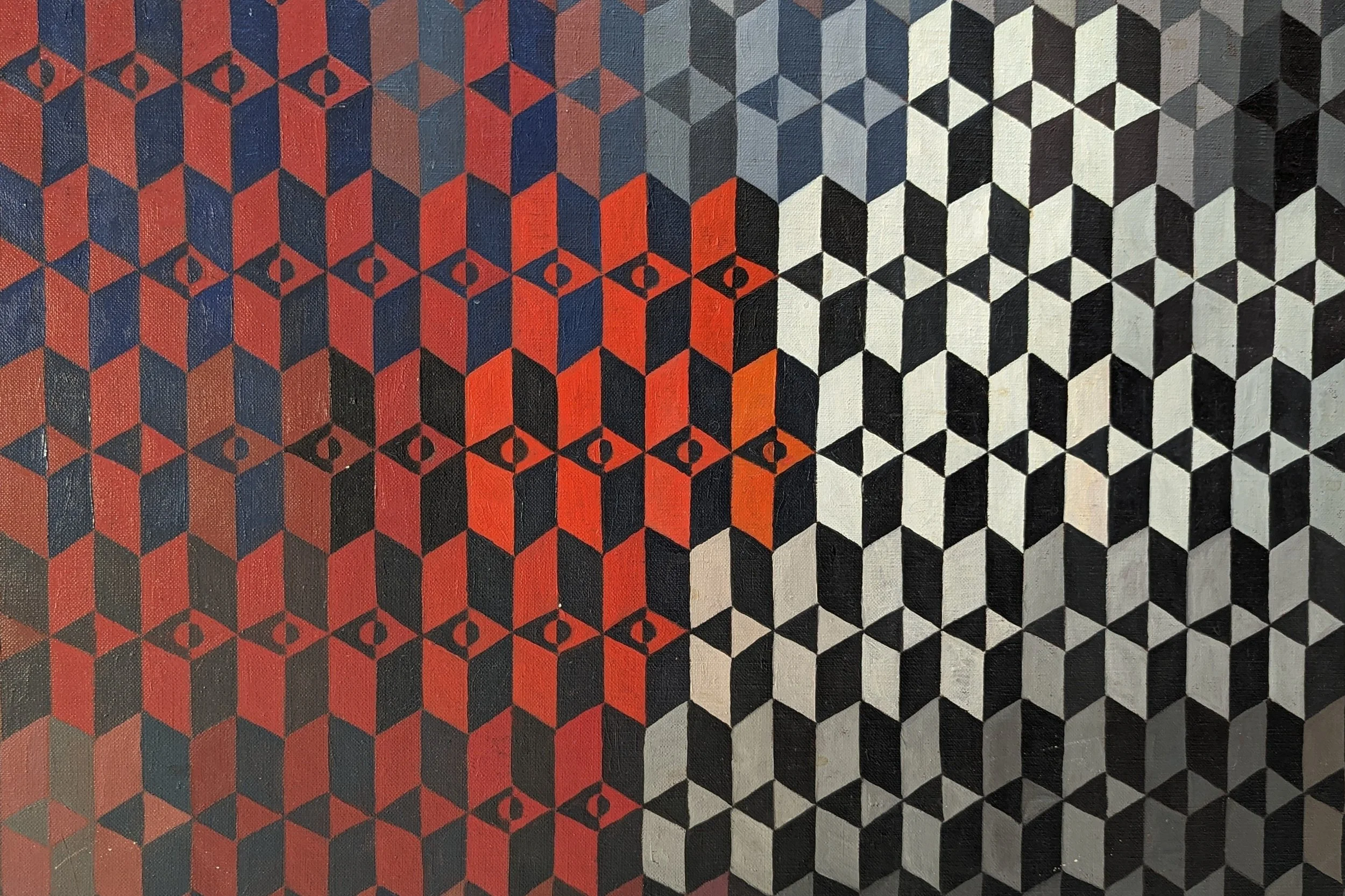
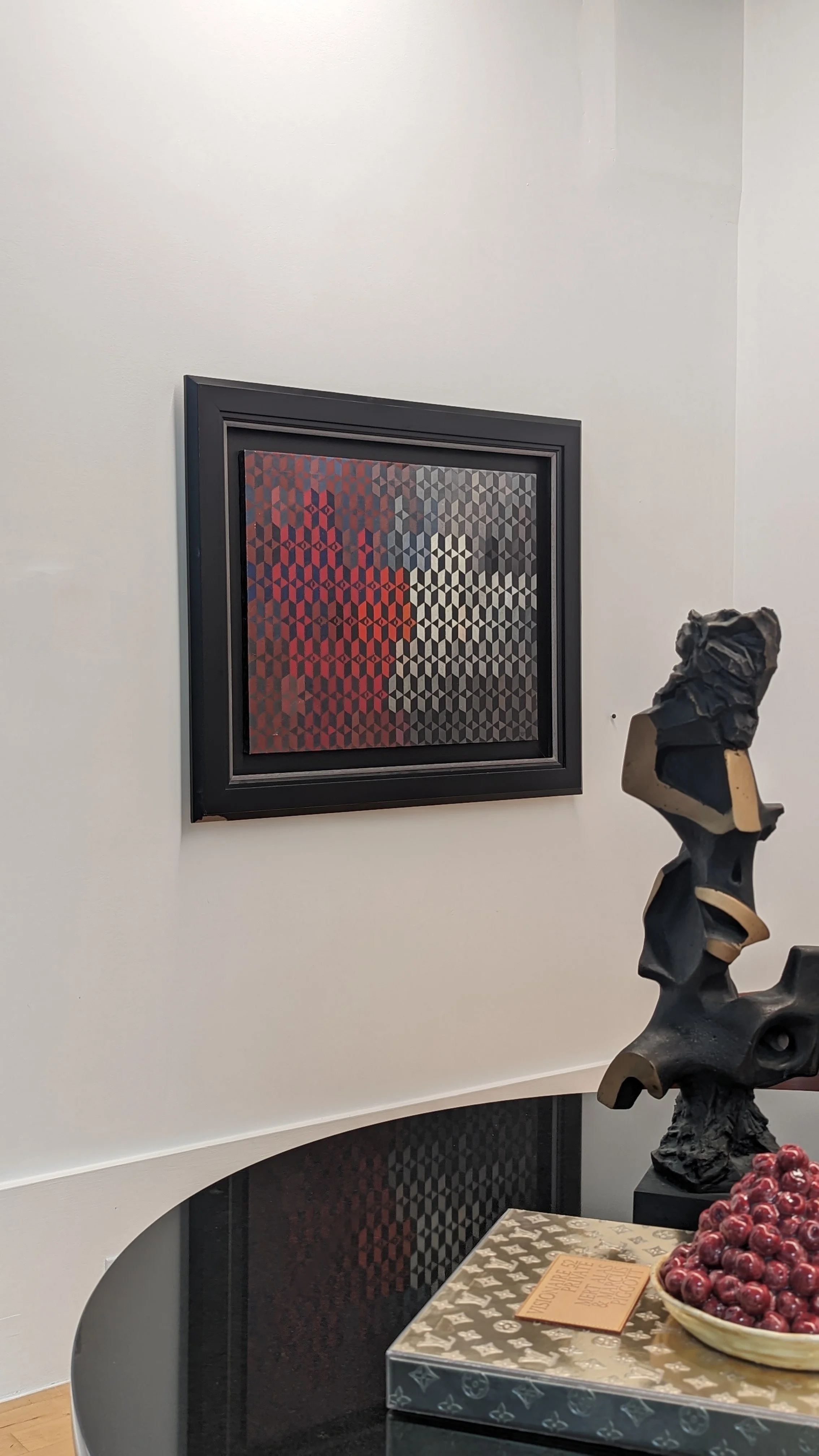
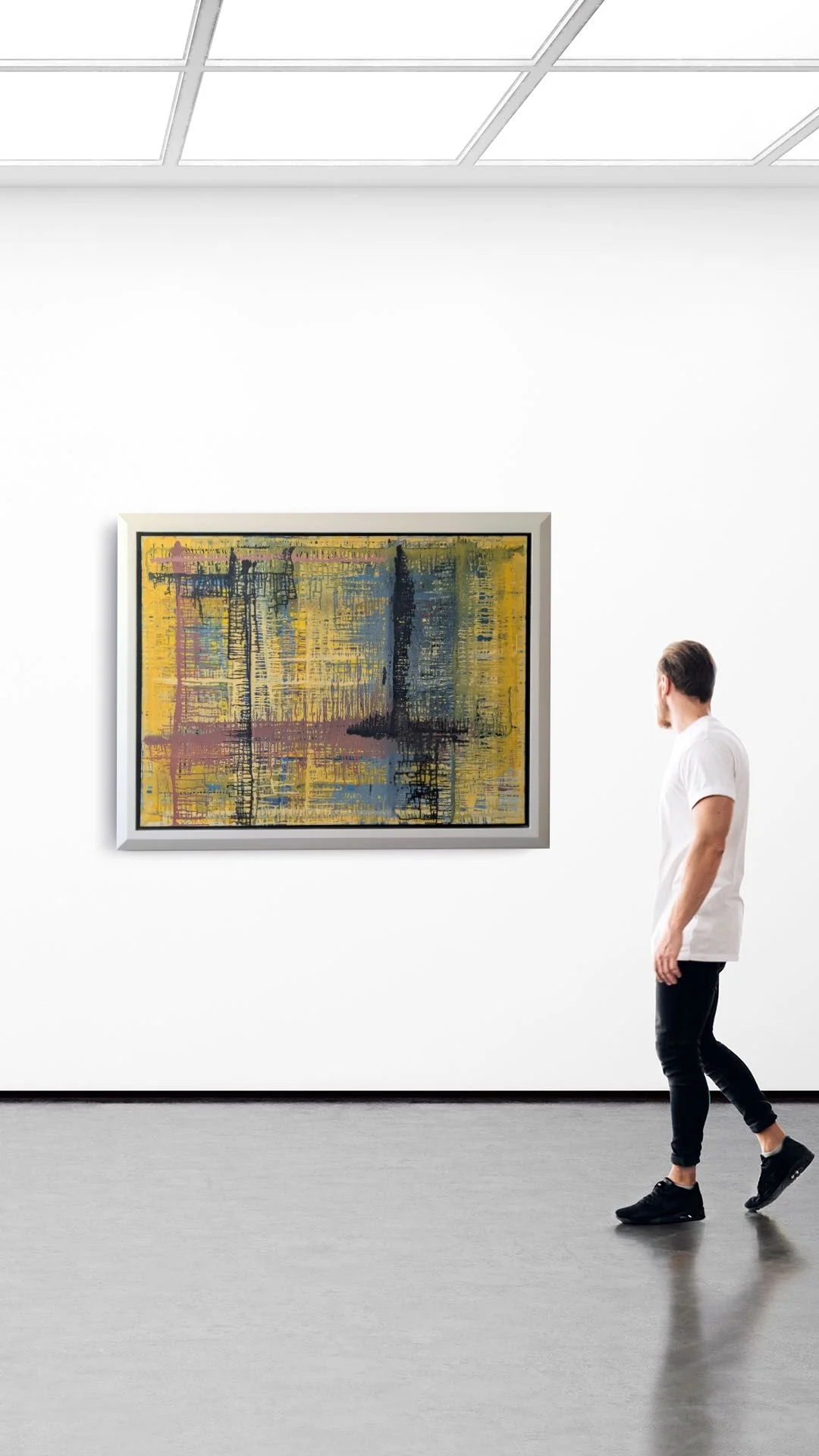
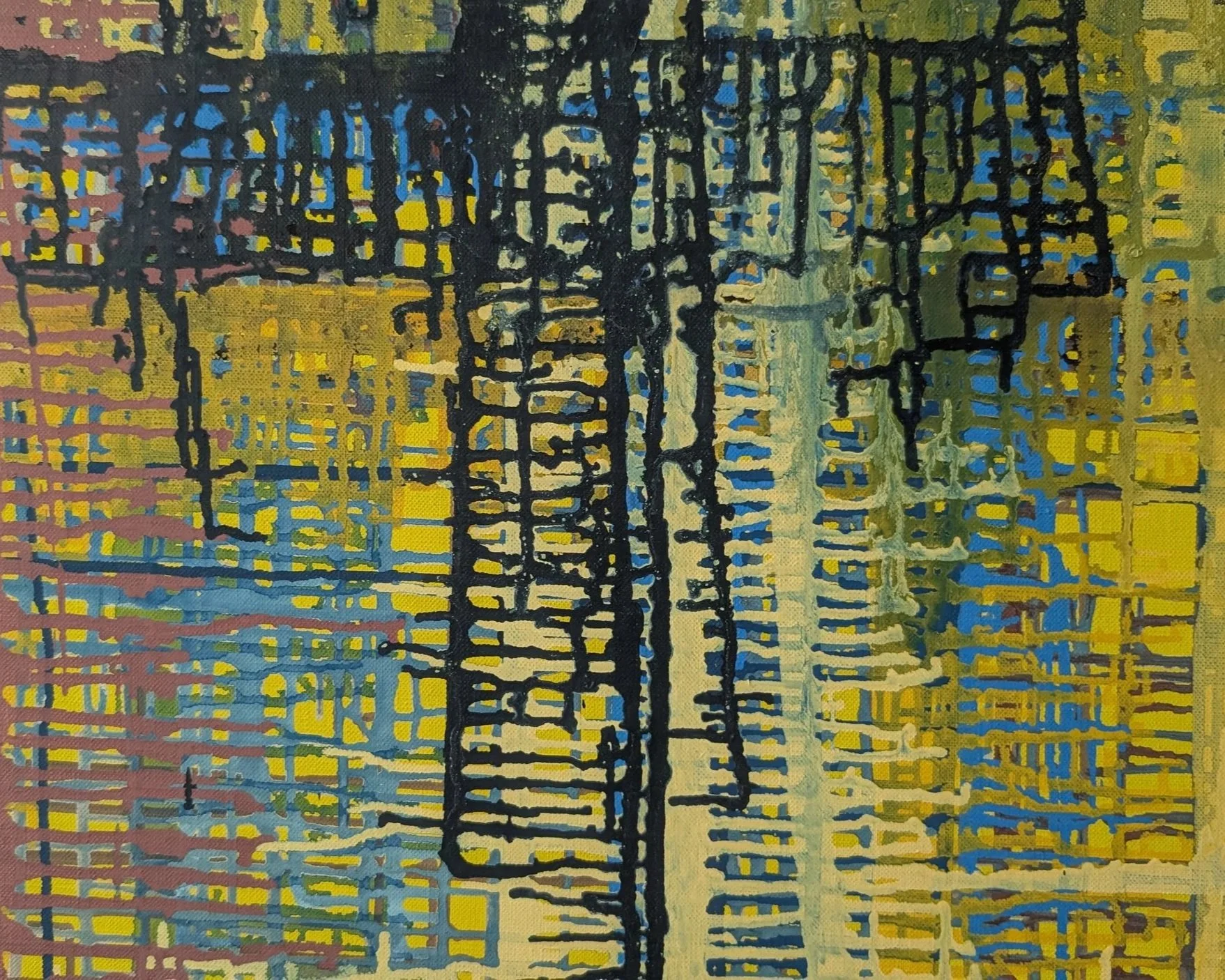
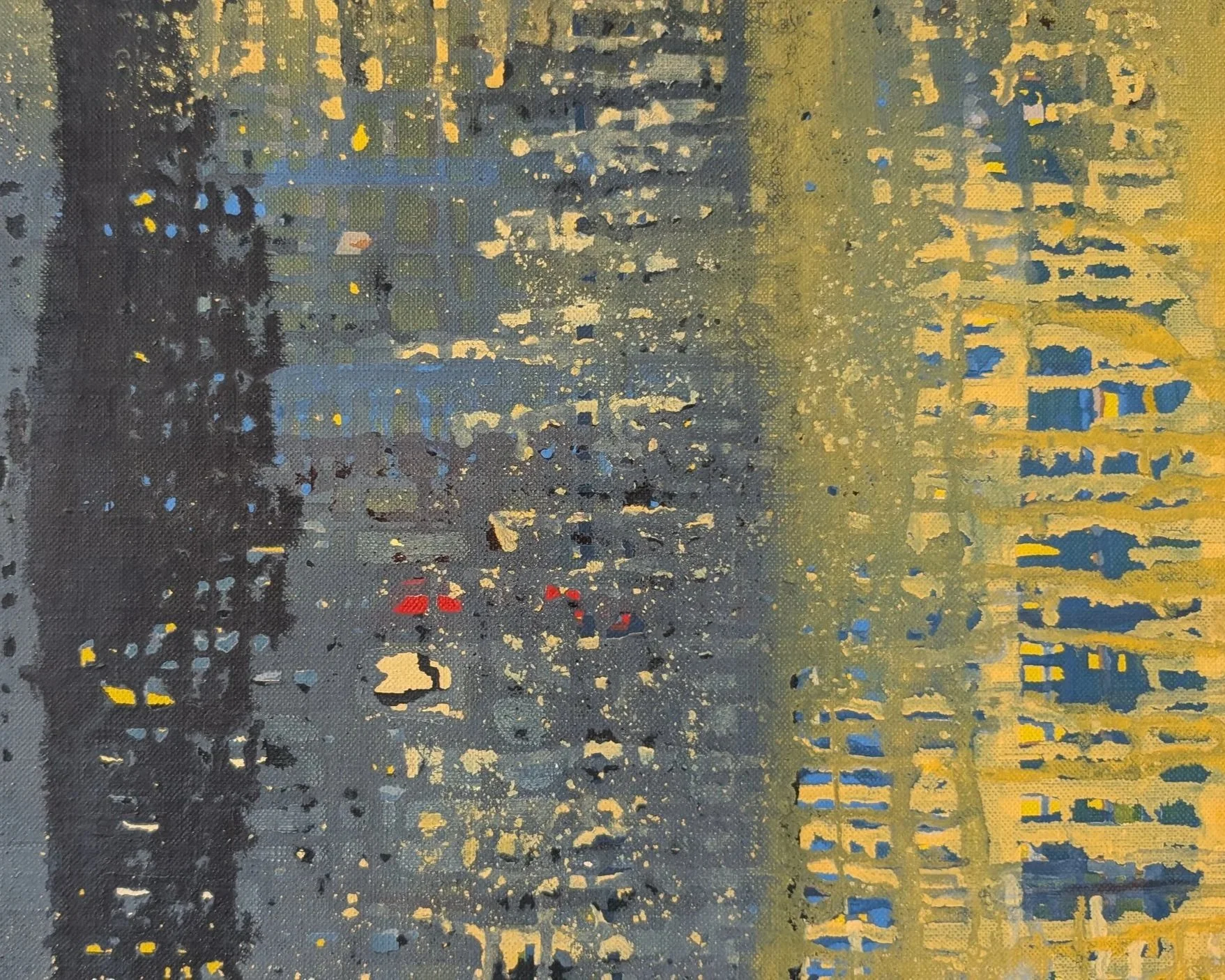
Executed in 1960, Battle of Mechanics and Poets - Facets Three is a rare and sophisticated geometric abstract masterwork from Maxwell Bates' celebrated Facets series. The composition features a complex, tessellated field of three-dimensional isometric cubes that create a mesmerizing optical tension. The left side surges with warm crimson reds, cobalt blues, and vivid orange, representing the emotional, fluid realm of the "Poets", while the right side resolves into stark monochrome whites, grays, and blacks, embodying the structured precision of the "Mechanics". Drawing on his dual background as both a professional architect and an avant-garde painter, Bates translates the philosophical tug-of-war between structure and emotion into a compelling visual language.

This painting carries notable early exhibition history, having been included in the Maxwell Bates Retrospective Exhibition at the MacKenzie Art Gallery. Though incorrectly cataloged in early literature as being on masonite, the work is executed in oil on canvas. The importance of the Facets series within 20th-century Canadian modernism was firmly established when a sister work, Facets Eleven (1961), was selected for the 5th Biennial Exhibition of Canadian Painting in 1963 and acquired directly into the permanent collection of the National Gallery of Canada.

Born in Calgary, Maxwell Bates was an architect, painter, poet, and pioneer of Canadian Modernism. In 1971, he became the co-founder and first President of the Victoria Limners Society alongside Herbert Siebner, establishing a vital collective for contemporary artists on the West Coast. Awarded the Order of Canada in 1980, Bates remains one of the most significant and independent voices in 20th-century Canadian art history.

Exhibition & Institutional History:

  • Exhibited, Maxwell Bates Retrospective Exhibition, MacKenzie Art Gallery, Regina, SK (1960)

  • Note: A related work from this series, Facets Eleven (1961), is held in the permanent collection of the National Gallery of Canada (acquired at the 5th Biennial Exhibition of Canadian Painting, 1963).

Major Accolades & Recognition:

  • Appointed Member of the Order of Canada (C.M., 1980)

  • Co-Founder and First President, The Victoria Limners Society (1971)

  • Honorary Doctorate of Laws (LL.D.), University of Calgary (1971)

  • Recipient, Canadian Centennial Medal (1967)

  • Major Retrospective Exhibitions at MacKenzie Art Gallery (1960), Winnipeg Art Gallery (1968), Vancouver Art Gallery (1973), and Art Gallery of Greater Victoria (1982)

Selected Permanent Collections:

  • National Gallery of Canada (Ottawa, ON)

  • Tate Gallery (London, UK)

  • Art Gallery of Ontario (Toronto, ON)

  • Vancouver Art Gallery (Vancouver, BC)

  • Art Gallery of Greater Victoria (Victoria, BC)

  • Glenbow Museum (Calgary, AB)

  • Canada Council Art Bank (Ottawa, ON)

  • Feckless Collection (Vancouver, BC)

Maxwell Bennett Bates
(Canadian, 1906–1980)
Battle of Mechanics and Poets - Facets Three
1960
Oil on canvas
Signed "MAXWELL BATES" lower right
24 × 30 in. (61.0 × 76.2 cm)

Executed in 1960, Battle of Mechanics and Poets - Facets Three is a rare and sophisticated geometric abstract masterwork from Maxwell Bates' celebrated Facets series. The composition features a complex, tessellated field of three-dimensional isometric cubes that create a mesmerizing optical tension. The left side surges with warm crimson reds, cobalt blues, and vivid orange, representing the emotional, fluid realm of the "Poets", while the right side resolves into stark monochrome whites, grays, and blacks, embodying the structured precision of the "Mechanics". Drawing on his dual background as both a professional architect and an avant-garde painter, Bates translates the philosophical tug-of-war between structure and emotion into a compelling visual language.

This painting carries notable early exhibition history, having been included in the Maxwell Bates Retrospective Exhibition at the MacKenzie Art Gallery. Though incorrectly cataloged in early literature as being on masonite, the work is executed in oil on canvas. The importance of the Facets series within 20th-century Canadian modernism was firmly established when a sister work, Facets Eleven (1961), was selected for the 5th Biennial Exhibition of Canadian Painting in 1963 and acquired directly into the permanent collection of the National Gallery of Canada.

Born in Calgary, Maxwell Bates was an architect, painter, poet, and pioneer of Canadian Modernism. In 1971, he became the co-founder and first President of the Victoria Limners Society alongside Herbert Siebner, establishing a vital collective for contemporary artists on the West Coast. Awarded the Order of Canada in 1980, Bates remains one of the most significant and independent voices in 20th-century Canadian art history.

Exhibition & Institutional History:

  • Exhibited, Maxwell Bates Retrospective Exhibition, MacKenzie Art Gallery, Regina, SK (1960)

  • Note: A related work from this series, Facets Eleven (1961), is held in the permanent collection of the National Gallery of Canada (acquired at the 5th Biennial Exhibition of Canadian Painting, 1963).

Major Accolades & Recognition:

  • Appointed Member of the Order of Canada (C.M., 1980)

  • Co-Founder and First President, The Victoria Limners Society (1971)

  • Honorary Doctorate of Laws (LL.D.), University of Calgary (1971)

  • Recipient, Canadian Centennial Medal (1967)

  • Major Retrospective Exhibitions at MacKenzie Art Gallery (1960), Winnipeg Art Gallery (1968), Vancouver Art Gallery (1973), and Art Gallery of Greater Victoria (1982)

Selected Permanent Collections:

  • National Gallery of Canada (Ottawa, ON)

  • Tate Gallery (London, UK)

  • Art Gallery of Ontario (Toronto, ON)

  • Vancouver Art Gallery (Vancouver, BC)

  • Art Gallery of Greater Victoria (Victoria, BC)

  • Glenbow Museum (Calgary, AB)

  • Canada Council Art Bank (Ottawa, ON)

  • Feckless Collection (Vancouver, BC)


"Battle of Mechanics and Poets - Facets Three, 1960," stands as a pivotal work in Maxwell Bates' illustrious career, captivating audiences with its rich layers of meaning and meticulous artistic technique. Initially listed as being on masonite, this oil-on-canvas work gained prominence through its inclusion in the Maxwell Bates, Mackenzie Art Gallery's retrospective exhibition, and later at the Museum of Lethbridge in 2019.

Bates, a polymath with roles as an artist, architect, and poet, seamlessly integrated visual and verbal expressions of creativity throughout his career. His works are characterized by heavy patterning, a flattening of perspective, and a vibrant colour sense. The recurring motif of facets, evident from his early watercolour "Figure Composition" in 1931, adds a distinctive touch, perhaps serving as a cryptic signature symbolizing the complexity of thought and meaning.

In "The Battle of the Poets and Mechanics, 1961," Bates masterfully employed facets to create luminous shifting colour fields, embodying his coined term "Facetism." The meticulous application of small geometric facets, varied in tone and colour, painted with precision, showcased a disciplined approach to abstract expressionism. In Bates' words, these facets held "no dependence on accident," reflecting his commitment to intellectual depth.

During an exposition at the Norman Mackenzie Art Gallery in Regina, Bates elucidated his artistic vision, distinguishing "Facetism" from the chaotic abstract trends of the time. Pointing to "Facets Three," featuring pyramids and hourglasses, he emphasized its intellectual nature compared to more emotional, dripped-paint abstractions. Another work, "Facets 1," a composition of red, blue, black, and white geometric patterns, he described as the point of impact in a battle, symbolizing a move from chaos to order.

Despite his predictions that artists would veer away from chaotic paintings in the future, Bates found that his experiments in "Facetism" led to a cul-de-sac, as revealed in conversations with Ted Godwin. Notably, he lamented, "Not one of the damn things sold." This candid admission adds a poignant dimension to Bates' artistic journey, underscoring the challenges and complexities inherent in pioneering new forms of artistic expression.

"Battle of Mechanics and Poets - Facets Three, 1960," is currently available at ADDITION, and we invite viewers to immerse themselves in the intricacies of Bates' visionary world—a world where facets become a vehicle for exploring the tapestry of imagination, intellectual depth, and the nuanced interplay between chaos and order.