

ROBERT BAILEY
Western Living Design Icon Award
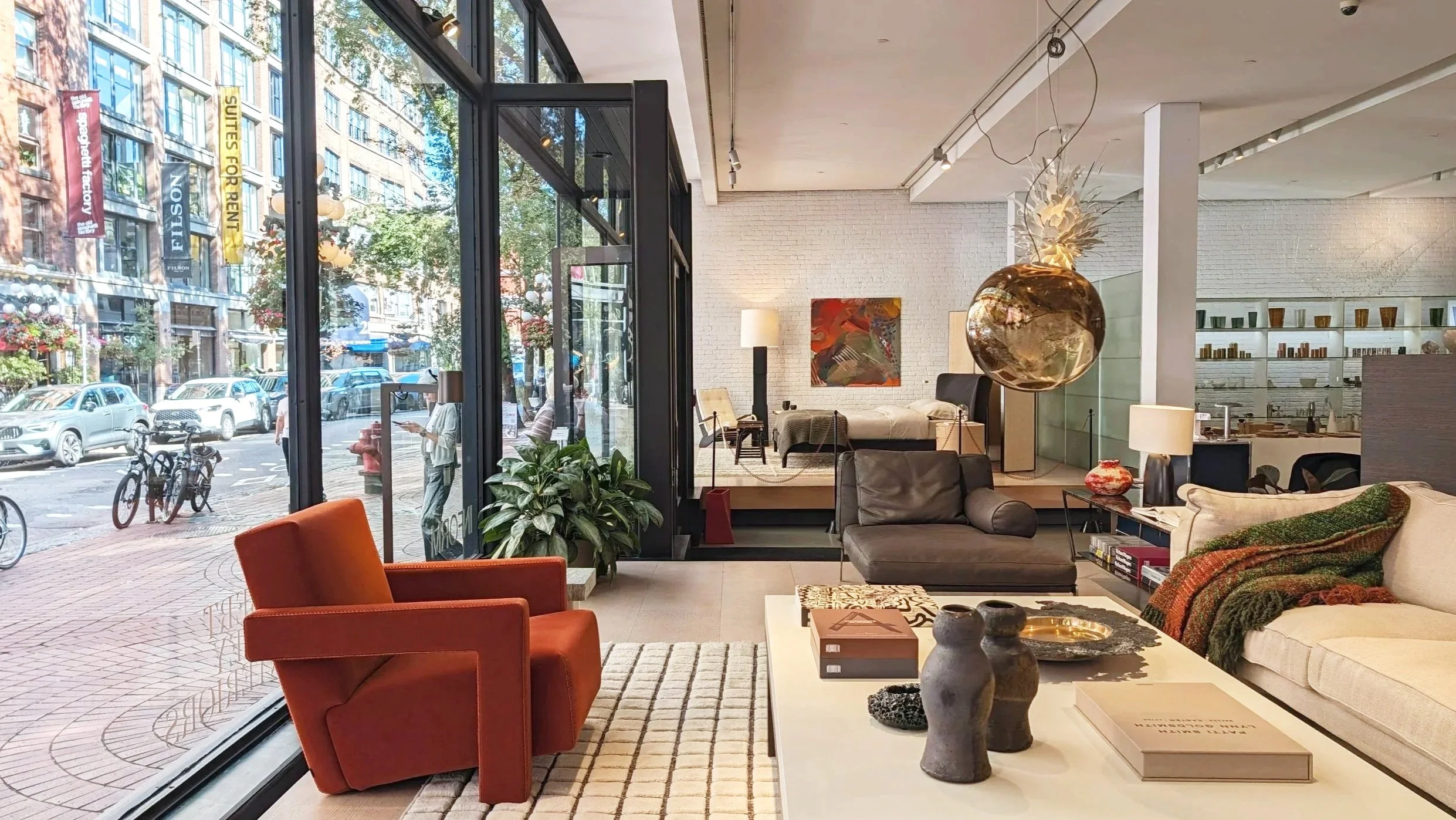
ON VIEW AT INFORM · SEPT 10 – NOV 6
CURATED BY ADDITION
Robert Bailey
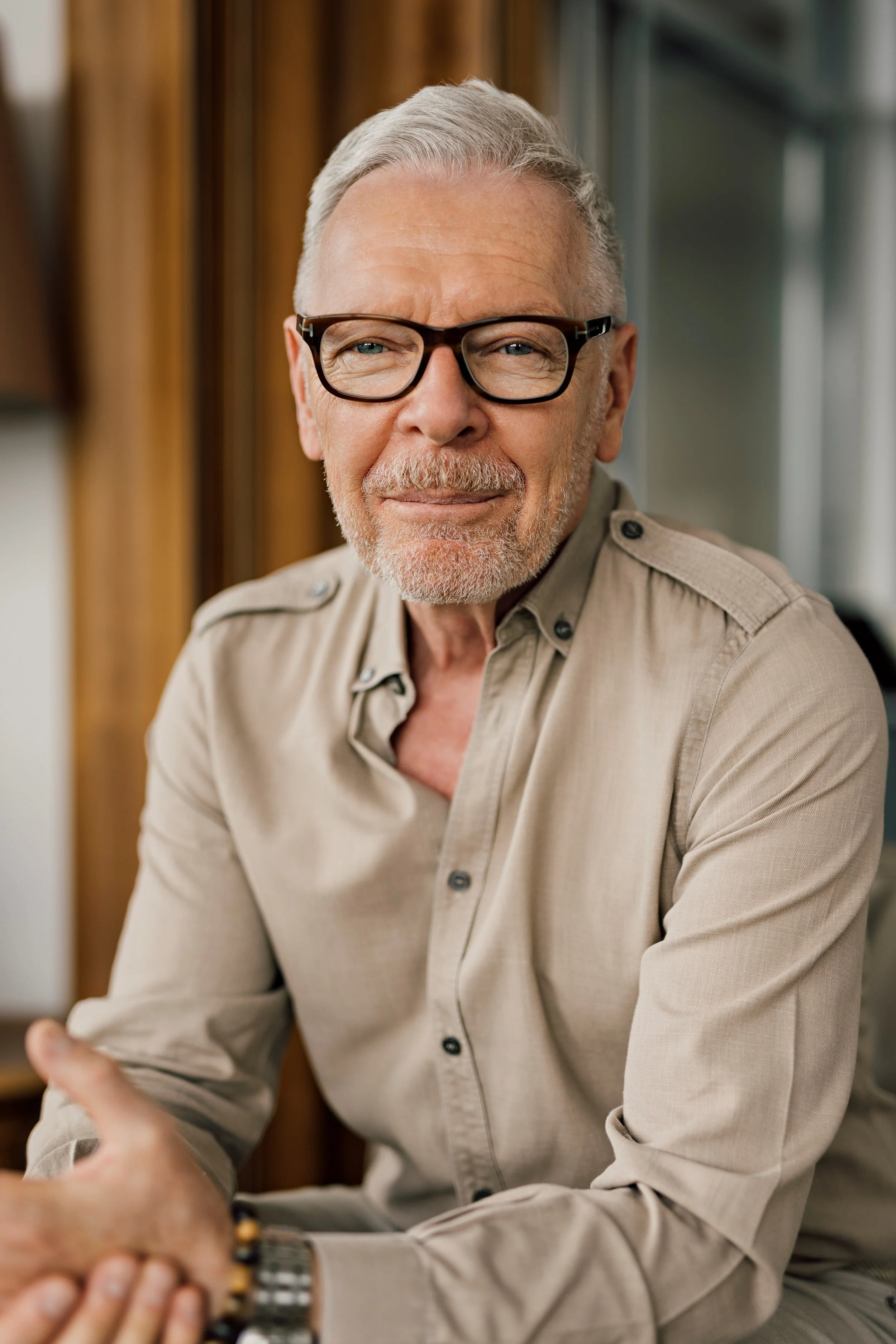
There's a particular kind of interior that doesn't compete with the art inside it: it makes room for it. Robert Bailey has spent a career building rooms like that. Named the 2026 Western Living Design Icon, he works in tone-on-tone palettes and layered materials, the kind of restraint that looks simple until you try to do it yourself.
It's an approach that suits a curator's instincts more than most interior design does. Bailey's spaces aren't backdrops; they're compositions, considered the way a gallery considers a wall, where every material earns its place and nothing is there by accident. His 2001 design for Vancouver's Opus Hotel still holds up for the same reason a good painting does: it wasn't built around a trend, so it didn't age with one.
That same sensibility hasn't stayed confined to four walls. Bailey's projects range from waterfront homes to private aircraft interiors, alongside collaborations with some of the Pacific Northwest's most notable architectural practices, the kind of range that comes from a designer who treats every project, regardless of scale, with the same discipline.
That discipline is exactly why this pairing makes sense. A Bailey interior and a Geoff Rees canvas share a core logic: both are built on tone, gesture, and the confidence to leave things unresolved rather than overworked. Placed together in the same window, neither is merely decoration for the other.
FEATURED ARTISTS:
Geoff Rees (1930-2018)
Geoff Rees spent five decades teaching Vancouver how to look. A painter and longtime instructor at the Vancouver School of Art, now Emily Carr University, Rees built a body of work defined by discipline: colour and gesture distilled to their essentials, nothing overworked, nothing left to chance.
His eye was shaped early by Japanese woodblock prints and later by years spent travelling through Asia and North Africa, journeys that left him fluent in a visual language most Western painters never encounter: pattern as structure, symbol as substance. What emerged was a body of work suspended between control and spontaneity, emotive brushstrokes and colour held in a kind of quiet animation, never quite settled, inviting the viewer to complete what the painting only gestures toward.
Rees was represented for years by Buschlen Mowatt, one of Western Canada's most influential galleries, and exhibited steadily across the region and abroad. In 1992, that same sensibility earned international recognition when his painting Beneath the Reef won one of the largest prizes ever awarded to a Canadian painter, presented alongside the Earth Summit in Rio de Janeiro. He kept painting daily until his death in 2018, choosing the solitude of the studio over the spotlight it had earned him.
The work now presented at Inform stands as a testament to that lifelong practice: art built on bold color, emotive gesture, and the quiet authority of a master painter.
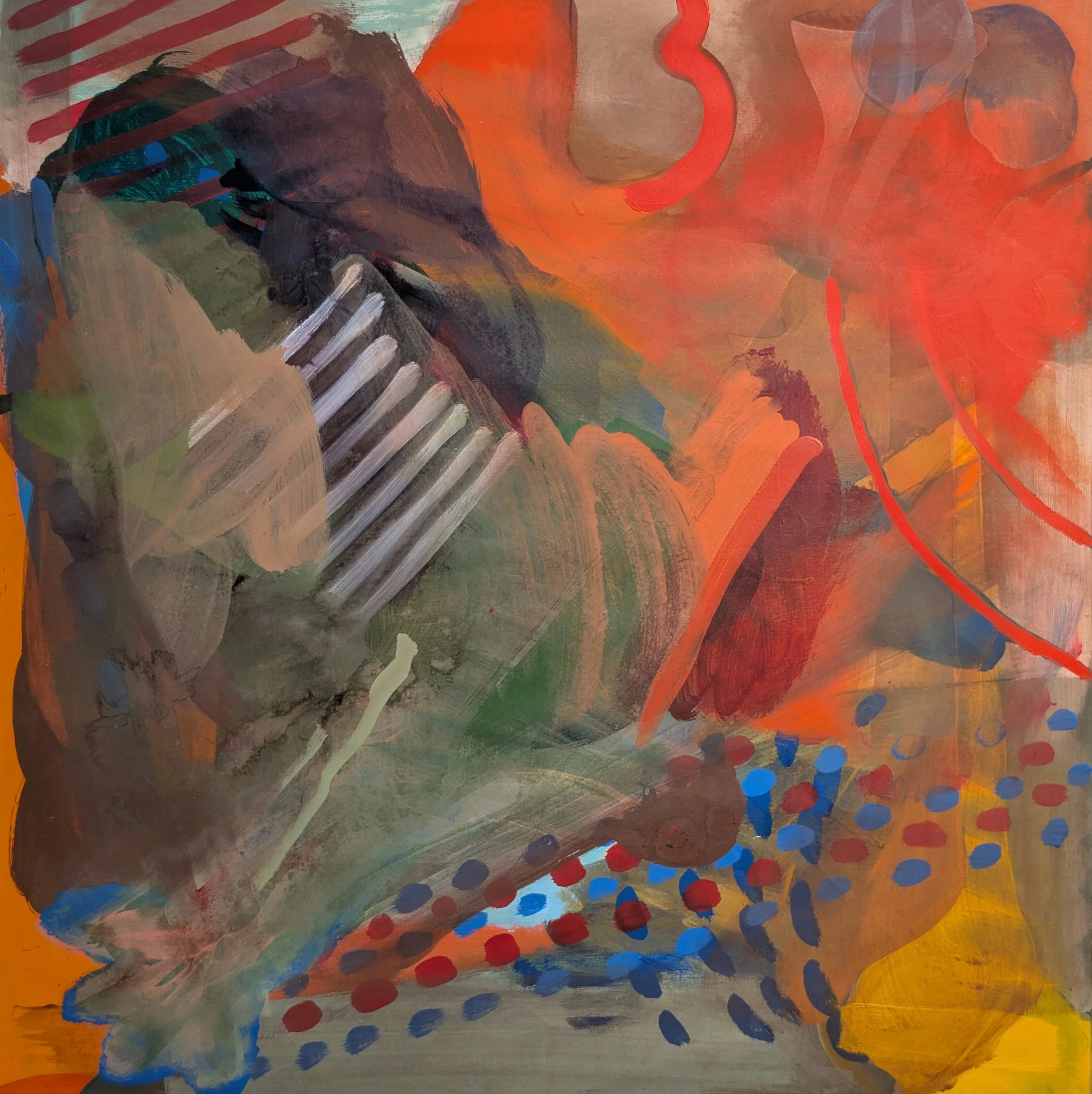
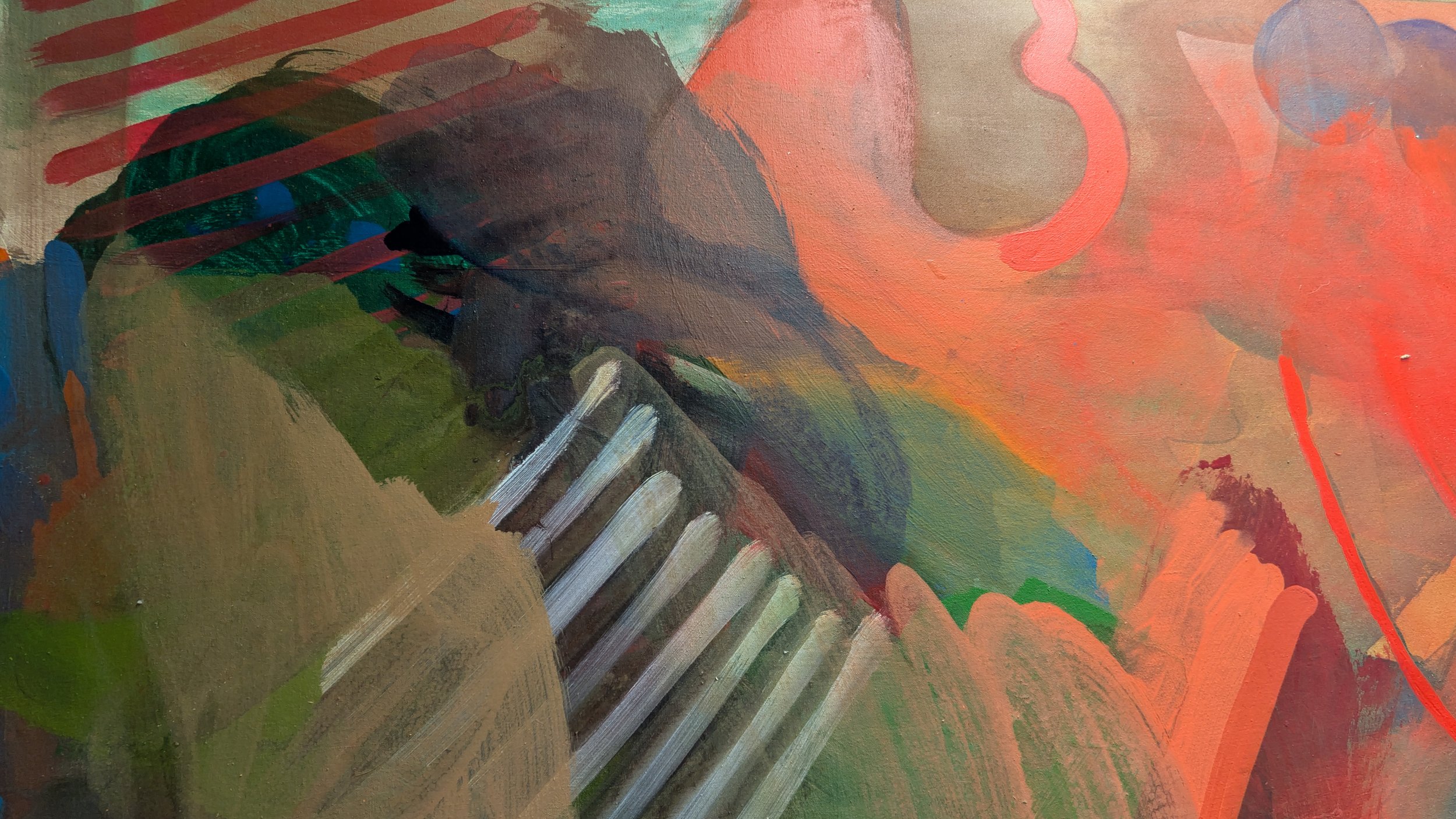
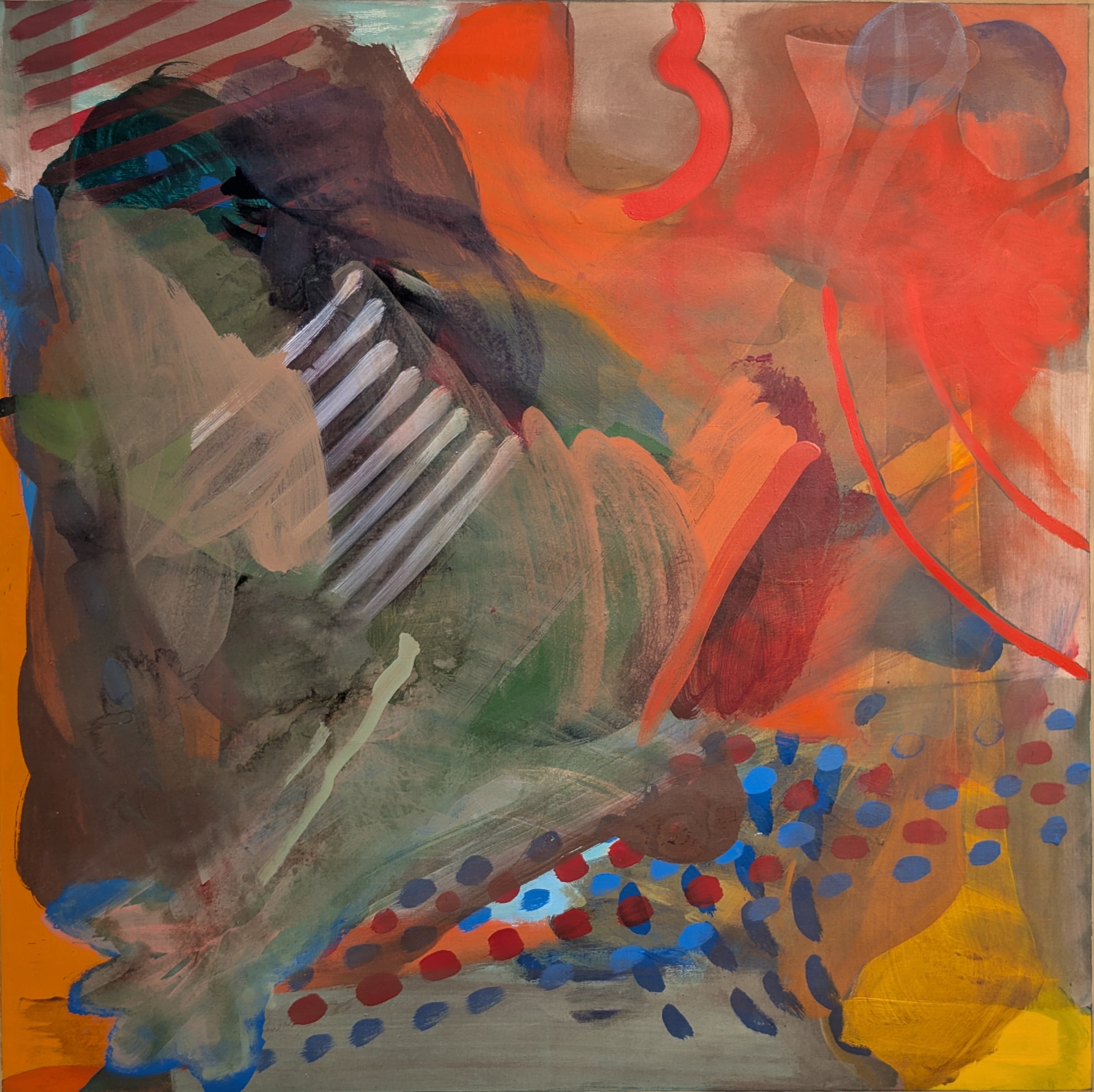
Geoff Rees (1930-2018), Untitled, 1989, Acrylic on canvas, Unframed: 51 × 50.5 in, $6,800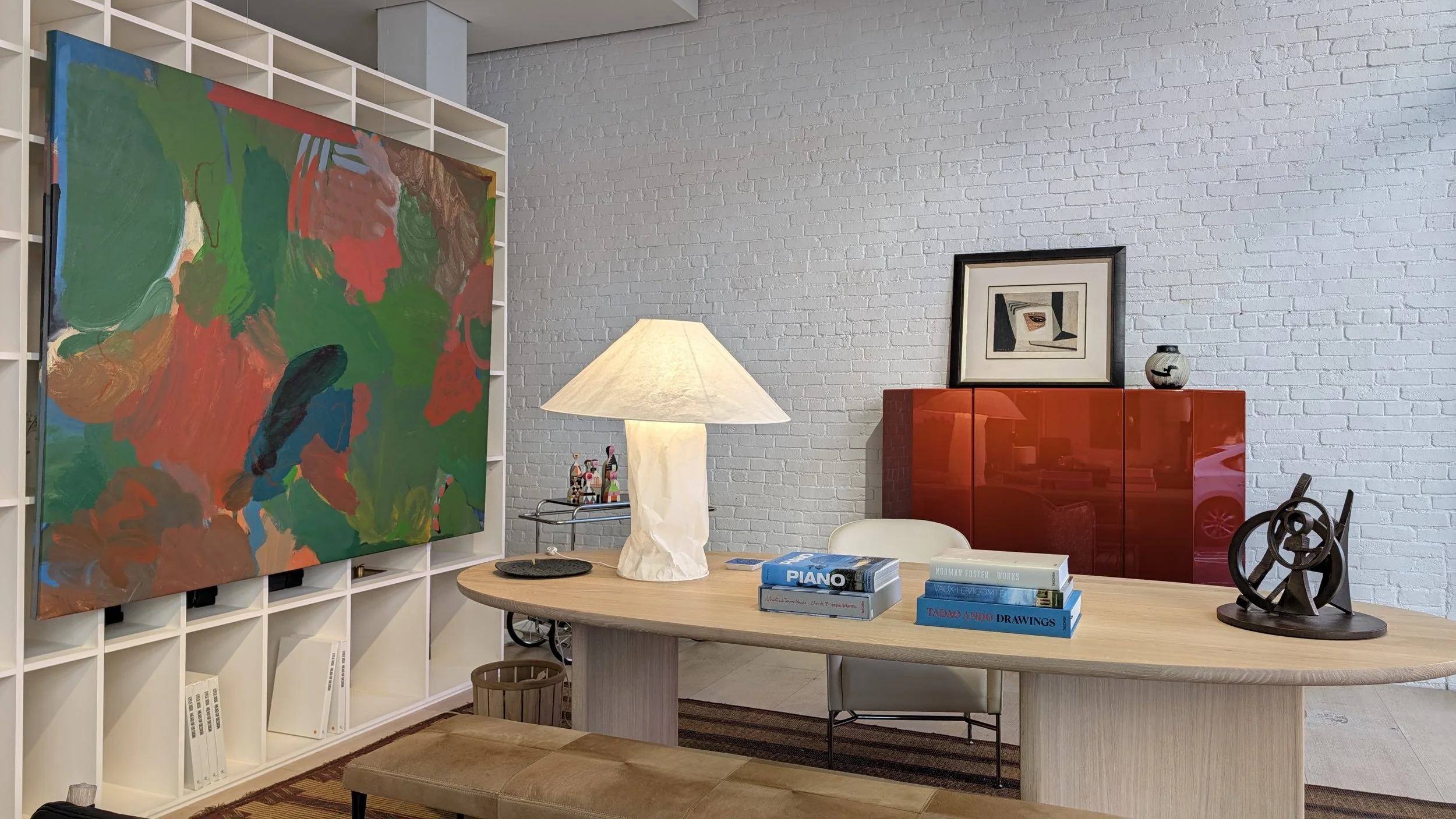
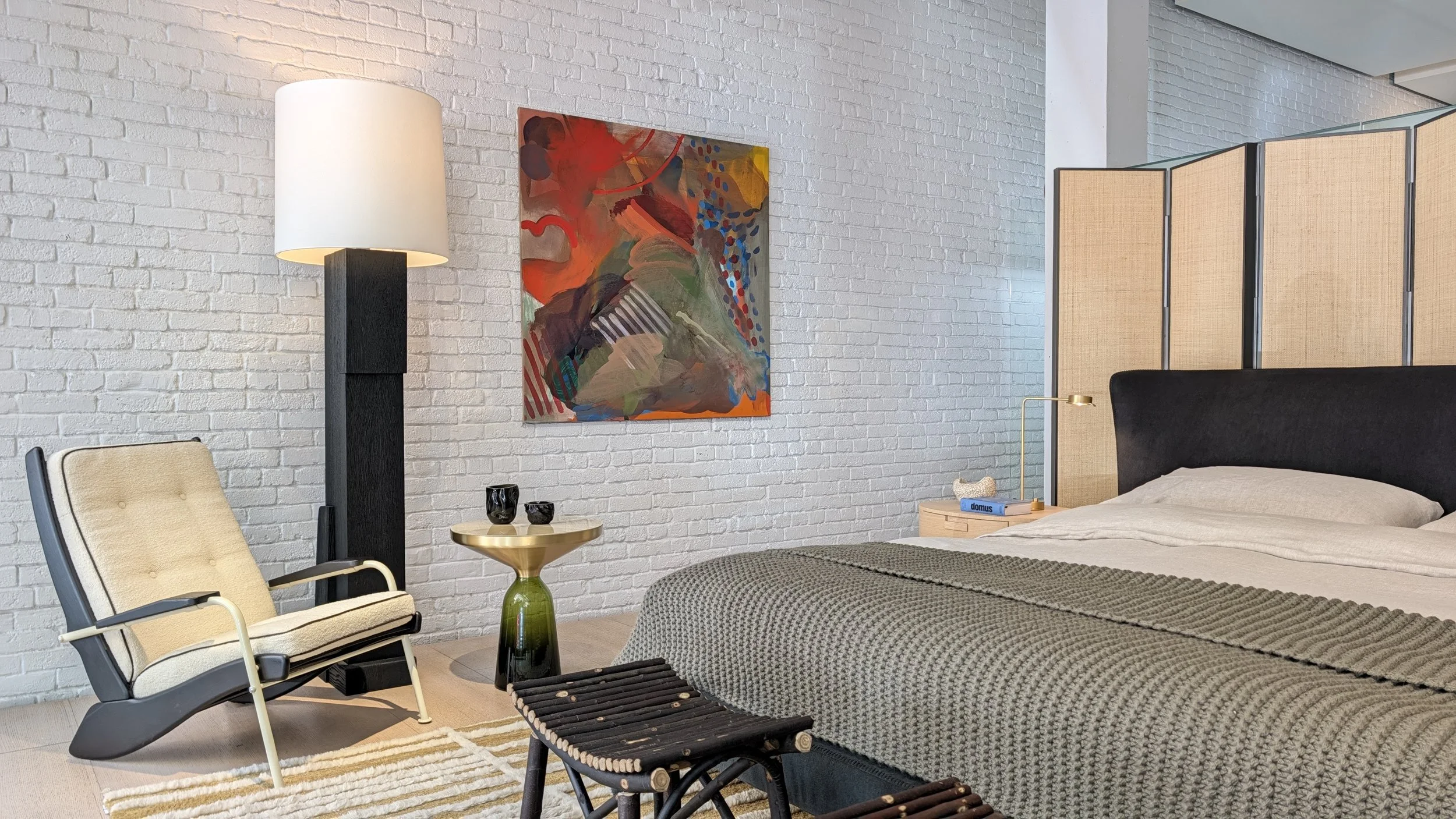
Left to right: Geoff Rees (1930–2018), Untitled, 1990s, acrylic on canvas, 68 × 77 in, $15,000 | Herbert Siebner (1925–2003), Stone Head, 1956, oil on board, 29.75 × 33.25 in, $6,500 | Wayne Ngan, Hakeme Vase with Decoration, hakeme-glazed stoneware, $4,500 | Ben McLeod, 99-709, 1999, welded oxidized steel, 13.5 × Ø14 in, $5,300Herbert Siebner (1925-2003)
Herbert Siebner arrived in Victoria in 1954 with a single Berlin credential that would shape everything after it: he'd trained under Max Pechstein, the last living link to German Expressionism. Two years later, he painted Stone Head, and Victoria had never seen anything like it.
The work turns a human face into something closer to architecture, a single stylized eye set against planes of bone-grey and stark black shadow, where mass and shadow do the work colour usually does. It's less a portrait than a carving in paint, primal in its logic and unmistakably shaped by the Expressionist rooms he'd just left behind. 1956 was the year it all converged: the same year he painted this, he won the Canadian National Award in Graphic Arts and announced himself as a serious new voice on the West Coast.
He spent the next five decades building on it. In 1971, he co-founded the Victoria Limners Society alongside Maxwell Bates and Elza Mayhew, a collective that gave the region's art scene a genuine bohemian center. His work now sits in the National Gallery of Canada, the Vancouver Art Gallery, the City of Berlin's own collection, and the private holdings of Princess Fernanda von Thurn und Taxis, a reach that spans continents and speaks to how far his reputation travelled from that first Victoria studio.
It was Lawren Harris who introduced him to the Vancouver Art Gallery in the 1960s, one Group of Seven founder recognizing the next serious voice in Canadian painting. Stone Head predates that moment by a decade, the first proof of a language Siebner would spend the rest of his life perfecting.
Inquire: Additional Siebner Works in Our Private Viewing Room
Herbert Johannes Josef Siebner, (1925–2003), Stone Head, 1956, Oil on board, $6,5000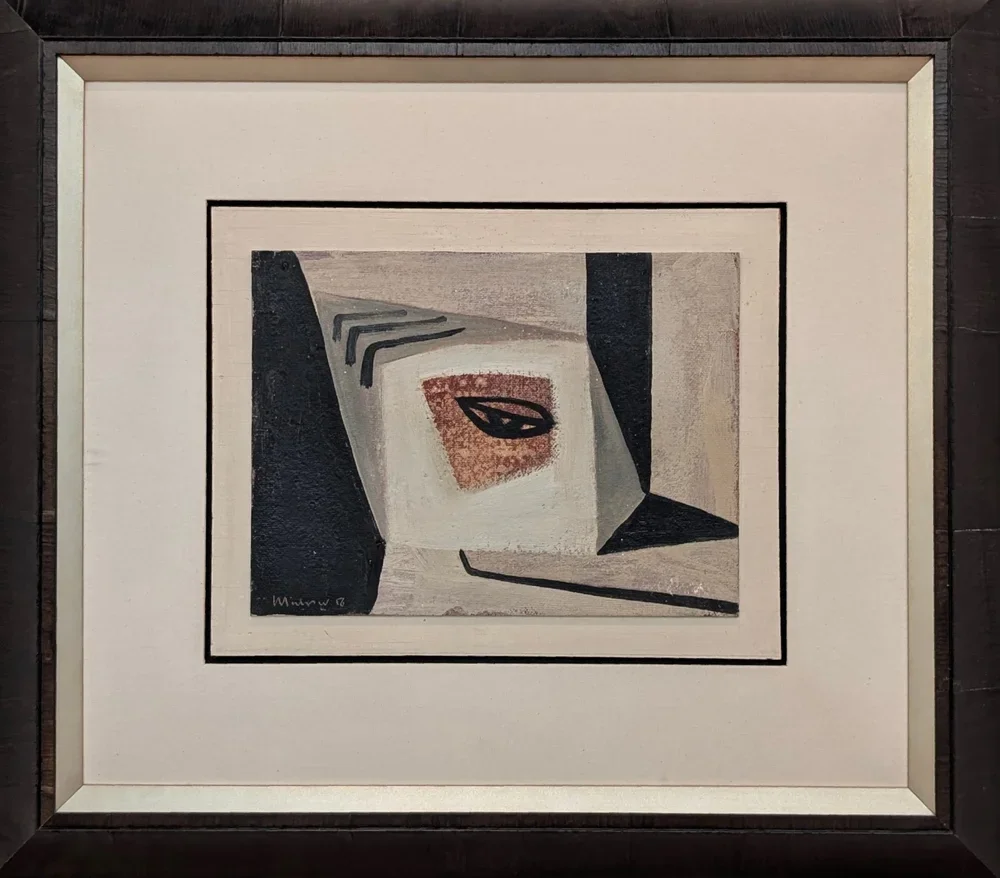
Herbert Siebner (1925–2003), Stone Head, 1956, Oil on board, 29.75 × 33.25 in. $6,500 CAD
Ben McLeod
Ben McLeod works from an acreage in the Alberta foothills, where the Rockies are close enough to feel like a collaborator. Steel comes from scrap yards near Cochrane. Some pieces weigh over a tonne and get moved into place by bulldozer. This isn't a studio in any conventional sense; it's a landscape that happens to also produce sculpture.
It started, unexpectedly, with a book. As a young man, McLeod carved a piece in stone; a family member liked it enough to trade him a book on Henry Moore for it. He'd never really considered sculpture before that. He hasn't stopped since.
His process is patient to the point of being unusual. A sculpture can take years to resolve, not because he's slow, but because he refuses to force it. He'll sit with a piece, walk away, come back. At some point he'll look at what he's built and decide only a section of it is actually working, the rest gets scrapped, reassembled, rebuilt around the part that resonated. Sketchbooks fill up alongside the sculptures themselves, thousands of small explorations that reveal a mind working in more dimensions than most: McLeod doesn't seem to see the world flat, and it shows in how his forms hold weight and suggest movement from every possible angle, there's no correct side to stand on.
The results carry the raw honesty of David Smith's welded steel, oxidized surfaces, jagged edges, imperfection left visible rather than sanded away. In stone and wood, he works the opposite instinct: fluid, organic forms that trace directly back to Moore, the same sculptor who set him on this path decades ago.
His sculptures now live in the Canada Council Art Bank, the Alberta Arts Foundation, and the University of Calgary's Nicoll Art Museum, among others. ADDITION has followed his work for years, and this show is the latest chapter in a practice that's still, unmistakably, in motion.Explore
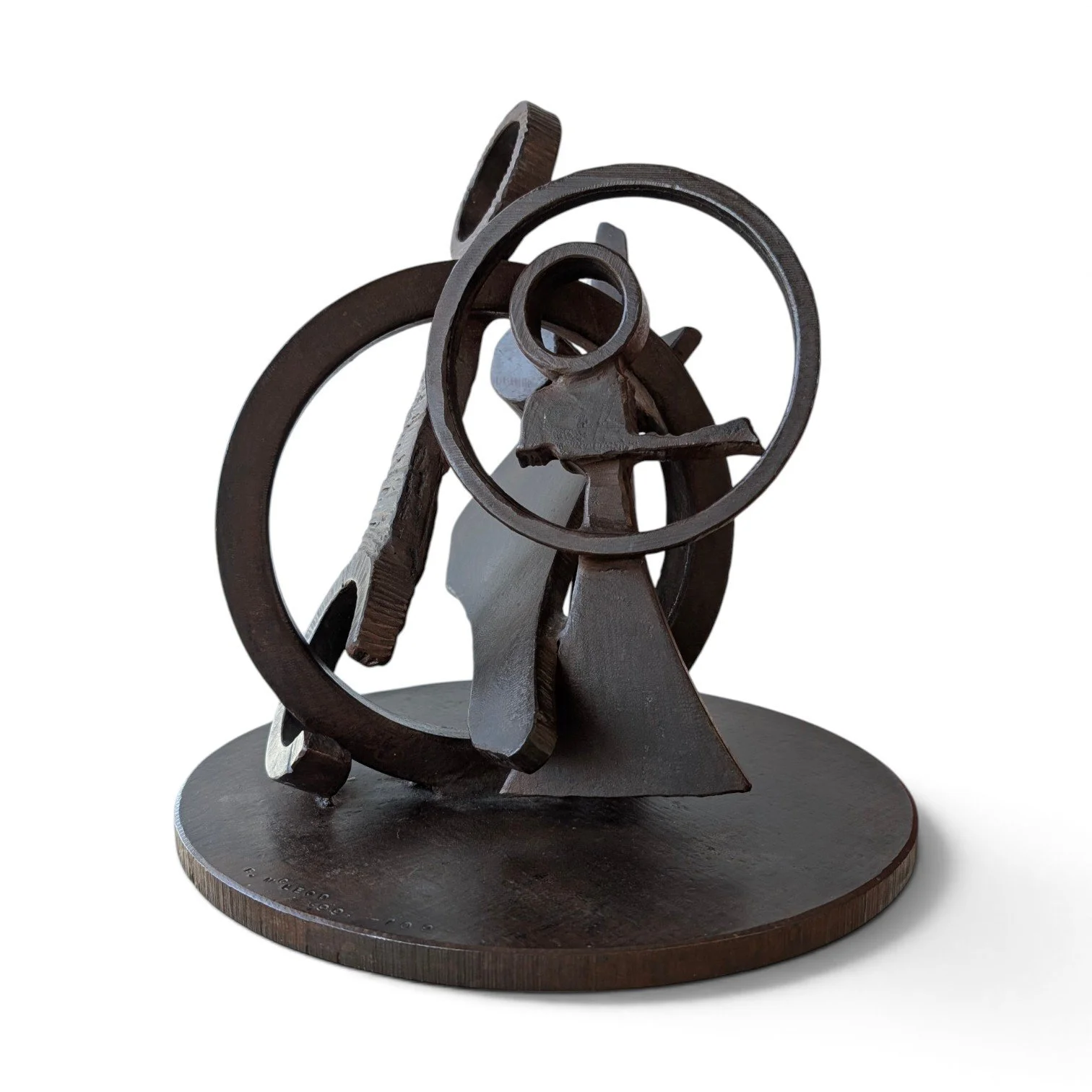
Ben McLeod, 99-709, 1999, Welded oxidized steel, 3.5 x DIA 14 in, $5,300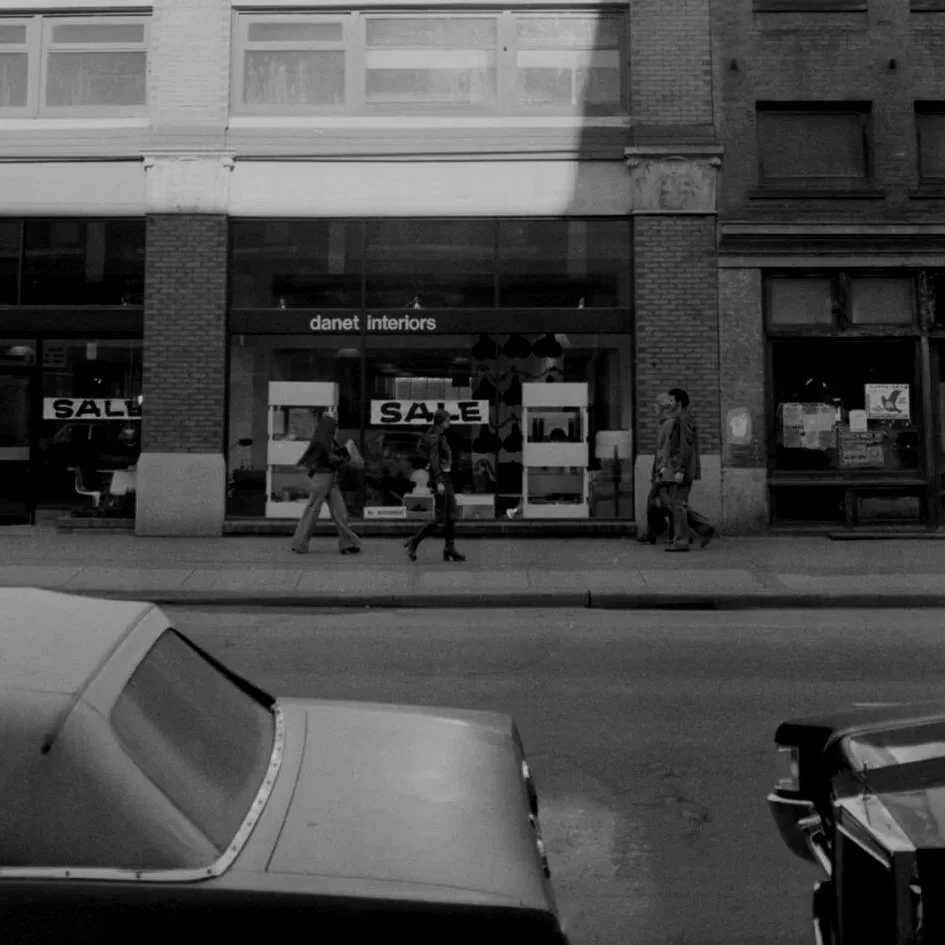

Widely recognized as one of the world's premier design destinations, Inform has spent over 60 years specializing in authentic, original design from more than 100 international and Canadian brands across its two Gastown locations at 50 and 97 Water Street.
Far beyond a traditional showroom, it functions as a comprehensive resource for living, dining, office, and outdoor spaces, integrating custom kitchens, baths, architectural lighting, textiles, and curated objects. Its floors represent both mid-century heritage and contemporary practice, supported by ongoing community exhibitions and talks.
For ADDITION founder Andres Aramburu, Inform marks the beginning of his practice: eight years under the direct mentorship of Nancy Bendtsen. To celebrate Robert Bailey's Western Living Design Icon Award, Robert and Inform invited Aramburu to curate the artwork for the window presentation, working alongside Robert to realize the vision for the space.
Subscribe to the Inform Interiors newsletter for updates on upcoming exhibitions, design talks, and store programming.
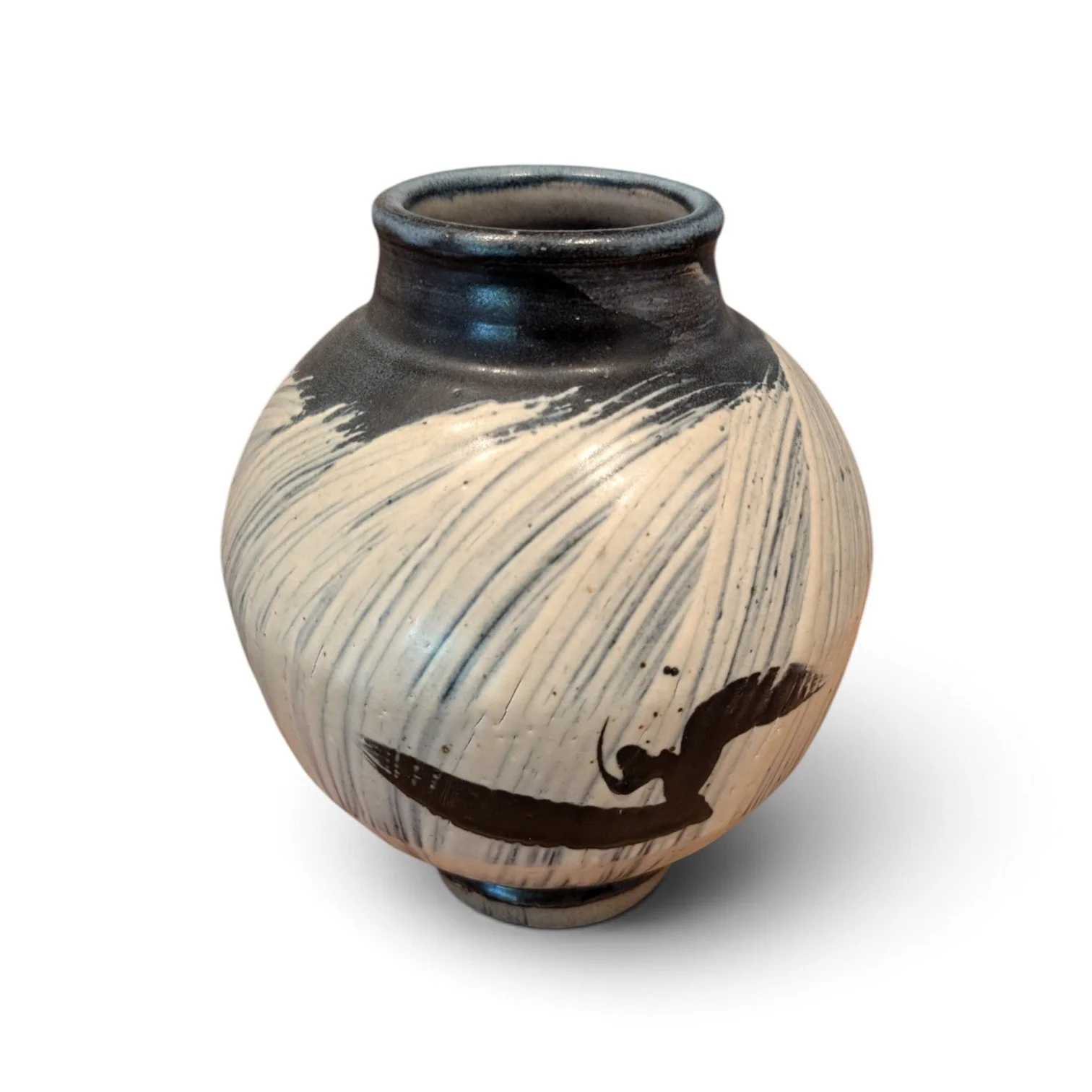
Wayne Ngan, Circa 1970s, Glazed stoneware with white hakeme slip, 9 in H × 8 in Dia, $4,500Wayne Ngan
Wayne Ngan (1937–2020) spent more than fifty years on Hornby Island building a body of work that never separated art from life. Born in Guangdong, China, he immigrated to Canada in 1952 and trained at the Vancouver School of Art, graduating with honours in 1963. Four years later, he moved to Hornby, where he hand-built a home and studio with his wife Anne, incorporating recycled and found materials into the structures themselves, an early sign that for Ngan, everything he built was already art.
He called it "maximum participation," and he meant it literally: Ngan built his own kilns too, including a wood-fired kiln modelled after one he had seen in a Song Dynasty museum in Beijing, funded by a Canada Council grant and completed in 1984. He studied historical Chinese and Korean pottery, apprenticed briefly with a Japanese master potter, and folded all of it into a visual language that stayed unmistakably his own. By 1978, the Vancouver Art Gallery gave him a solo exhibition, curated by Doris Shadbolt, cementing what Hornby Island had already known for a decade.
This vase carries the hallmarks of that practice: sweeping hakeme brushwork in grey-blue slip, applied with the same gestural confidence as ink on paper, and a single bird caught mid-flight near the base, rendered in a few decisive strokes. Stylistically, the work sits within his mature Hornby Island period, likely dating from the 1970s to 1990s.
This vase comes to ADDITION on consignment from a private Vancouver collection, a body of work assembled over the past two decades and entrusted to the gallery to celebrate Canada’s defining postwar artists.
A broader selection from this collection can be accessed through our private viewing room. For inquiries, email hello@addition.agency.
Glenn Lewis
Glenn Lewis has spent over sixty years refusing to stay in one discipline. Born in Chemainus, BC, in 1935, he trained at the Vancouver School of Art before apprenticing under Bernard Leach in St. Ives from 1961 to 1964, entering one of the most consequential lineages in studio pottery alongside a master who spent decades bridging Western and Eastern ceramic traditions. Lewis brought that training home to Vancouver, where he helped build the city's avant-garde art scene from the ground up, co-founding the Western Front and moving fluidly between ceramics, video, performance, and photography. His contributions were recognized with the Governor General's Award in Visual and Media Arts, one of the country's highest honours.
These two vessels are stoneware, their upper bodies finished in a deep matte brown while a glossier ochre and amber glaze washes down the lower halves, breaking and pooling unevenly in a way that speaks to the precise kiln control Lewis picked up under Leach. Each figure's face is reduced to a few essential marks: pierced eyes, a faint ridge for a nose, and an expression somewhere between watchful and placid. Read as a pair, male and female, one figure carries two incised marks across its chest while the other is left plain, a quiet detail that turns two vases into a dialogue. Vases in function, they are sculpture in spirit, playful, slightly enigmatic, and driven by the same conceptual instinct that runs through Lewis's entire career, rendered here in clay and fire.
These two works come to ADDITION on consignment from a private Vancouver collection, built carefully over the past twenty years and entrusted to the gallery, spanning some of Canada's most significant artists.
Many other works from this collection are available in our private viewing room. Private in the truest sense; email hello@addition.agency for access.
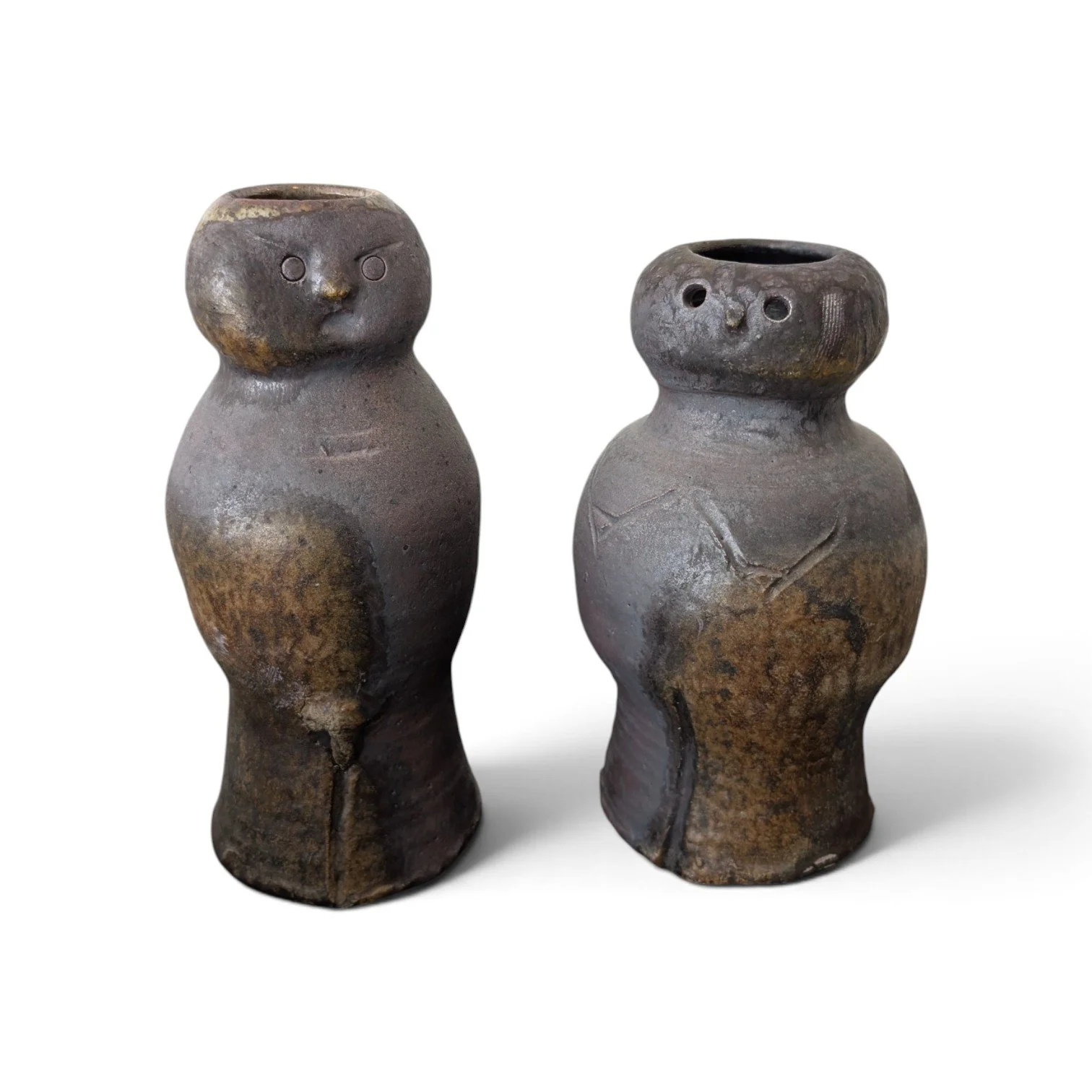
Glenn Lewis, Pair of Figural Ceramic Vessels, 1960s, Stoneware with glazes, $10,000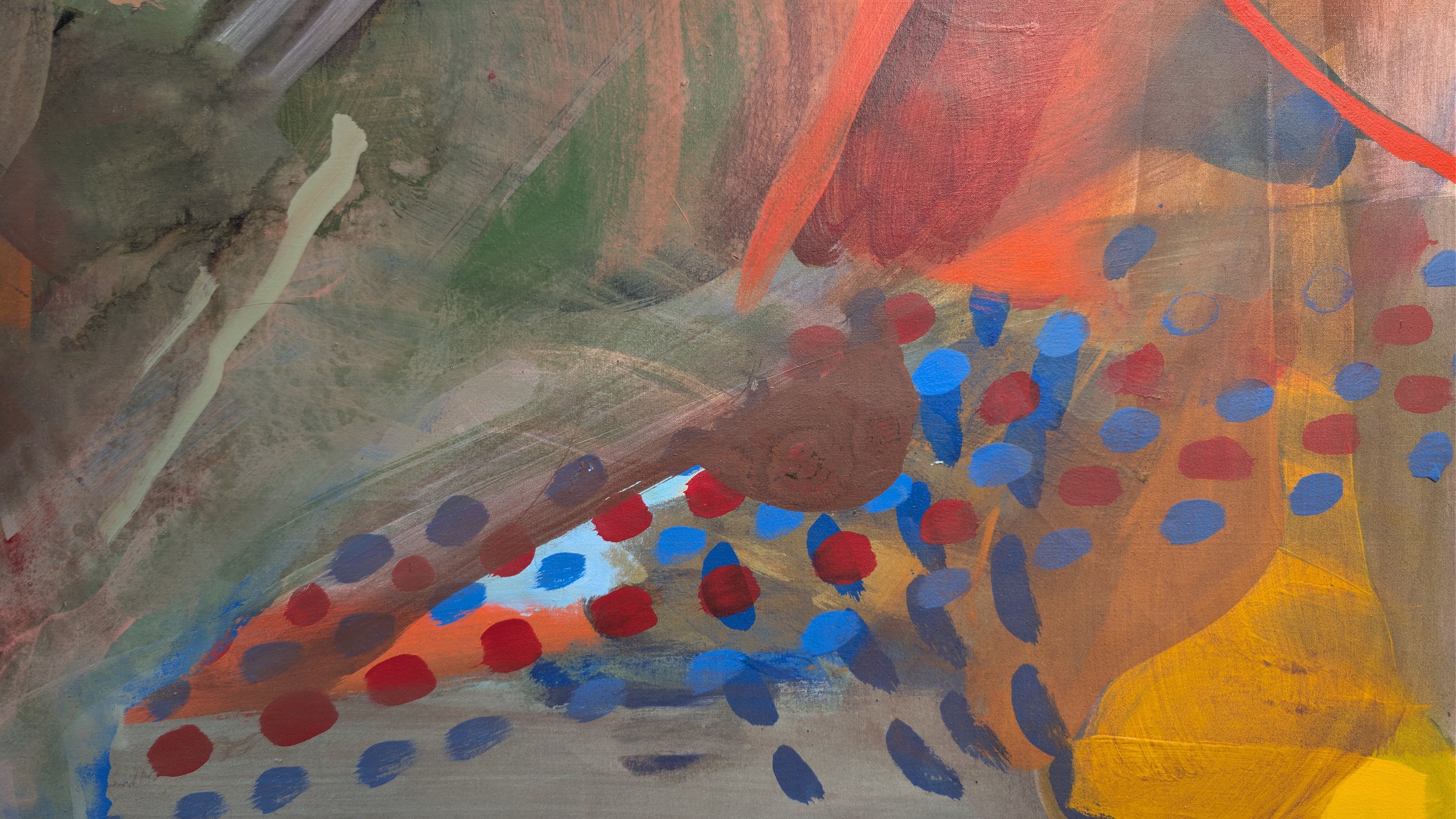
WORK WITH ADDITION
ADDITION exists to create meaningful encounters between art, design, and architecture.
We partner with collectors, homeowners, architects, and designers to source, commission, and curate for projects of every scale. If you are looking to build a space with intention, we welcome the conversation.
Collect from the window

Glenn Lewis
Untitled - Pair of Figural Ceramic Vessels
Circa mid-1960s
Stoneware with matte brown and glossy ochre/amber glazes
Taller Vessel: 10 in H × 4 in Dia
Shorter Vessel: 9 in H × 4 in Dia ($22.9 \times 10.2\text{ cm}$)
Stamped by the artist on the underside
Excellent vintage condition
This rare pair of mid-1960s stoneware vessels by Canadian conceptual artist and ceramist Glenn Lewis captures a pivotal moment of harmony between traditional studio pottery and sculptural figuration. Created shortly after Lewis completed his apprenticeship under Bernard Leach at St Ives, these works demonstrate his total command of reduction firing: deep-brown matte upper bodies contrast sharply with a runny ochre and amber glaze that breaks and pools across the lower sections.
Conceived as an enigmatic pair, each figure features a stylized, reduced face—pierced eyes, a delicate ridge for a nose, and an expression balancing watchfulness with quiet composure. One vessel displays fine incised linear markings across its chest while the other remains plain, creating a silent narrative dialogue between the two forms. Vases in utility but sculpture in spirit, these vessels represent an essential bridge between Lewis's formal Leach Pottery lineage and the playful, concept-driven art practice he established in Vancouver during the late 1960s.

