

❋
A Dialogue of Lineage: The Fells House
Ron Thom × D'Arcy Jones
CURATED BY ADDITION.AGENCY
PRIVATE VIEWING & MIXER
WHEN: Thursday, July 9, 2026 4:00 PM – 8:00 PM WHERE: The Fells House
THE CURATION
Join ADDITION for an exclusive evening celebrating the architectural lineage of the historic Fells House. Presented in alignment with the West Vancouver Art Museum’s: West Coast Modern Week, this private reception offers a unique opportunity to experience a spatial narrative that honours the dialogue of lineage between Ron Thom’s 1959 vision and D'Arcy Jones’s seamless 2025 evolution.
The historical weight of the home will be anchored by foundational works from Painters Eleven founder Harold Barling Town (1924–1990), alongside modern masters Maxwell Bates (1906–1980) and Herbert Siebner (1925–2003). Deepening the local connection to the West Vancouver Art Museum are the late-modernist works of Ron Stonier (1933–2001), whose retrospective was celebrated by the museum in 2019. The selection expands through West Coast perspectives, featuring bronze-cast cars by Marcus Bowcott, architectural charcoal and oil pastels by Bill Baker, brutalist steel sculptures by Ben McLeod, and vivid gestural abstractions from the estate of Geoff Rees (1930–2018).
Early work by Douglas Coupland and text-based pieces by Ben Skinner give way to Jennifer Latour’s celebrated photographs of intricate, Calder-esque plant assemblages. An international perspective features Claudia Cuesta, recognized by former VAG Chief Curator Daina Augaitis for uniting the human body with minimalist sculpture. She is paired with Camila Rodrigo, whose hard-edge abstractions use custom pigments sourced from the Chilean and Peruvian coastlines.
The spatial narrative continues with collectible design works by Jeff Martin Joinery, alongside reclaimed ceramic works from the Pacific Northwest and Extruded series of BC Achievement Award recipient Tyler James Goin. Bringing a final layer of atmosphere to the architecture is sculptural lighting by Canadian-Dutch studio OS ∆ OOS (Oskar Peet and Sophie Mensen), paired with the porcelain ellipse sconce by Meg Hübert, recipient of the 2026 Western Living Design 25 Award for Product Design and the People's Choice Award.
Through custom interior design, art advisory, and spatial storytelling for both private homes and progressive brands, ADDITION explores how art, design, and architecture can unite to reflect and amplify the identity of those who inhabit them.
THE HOUSE
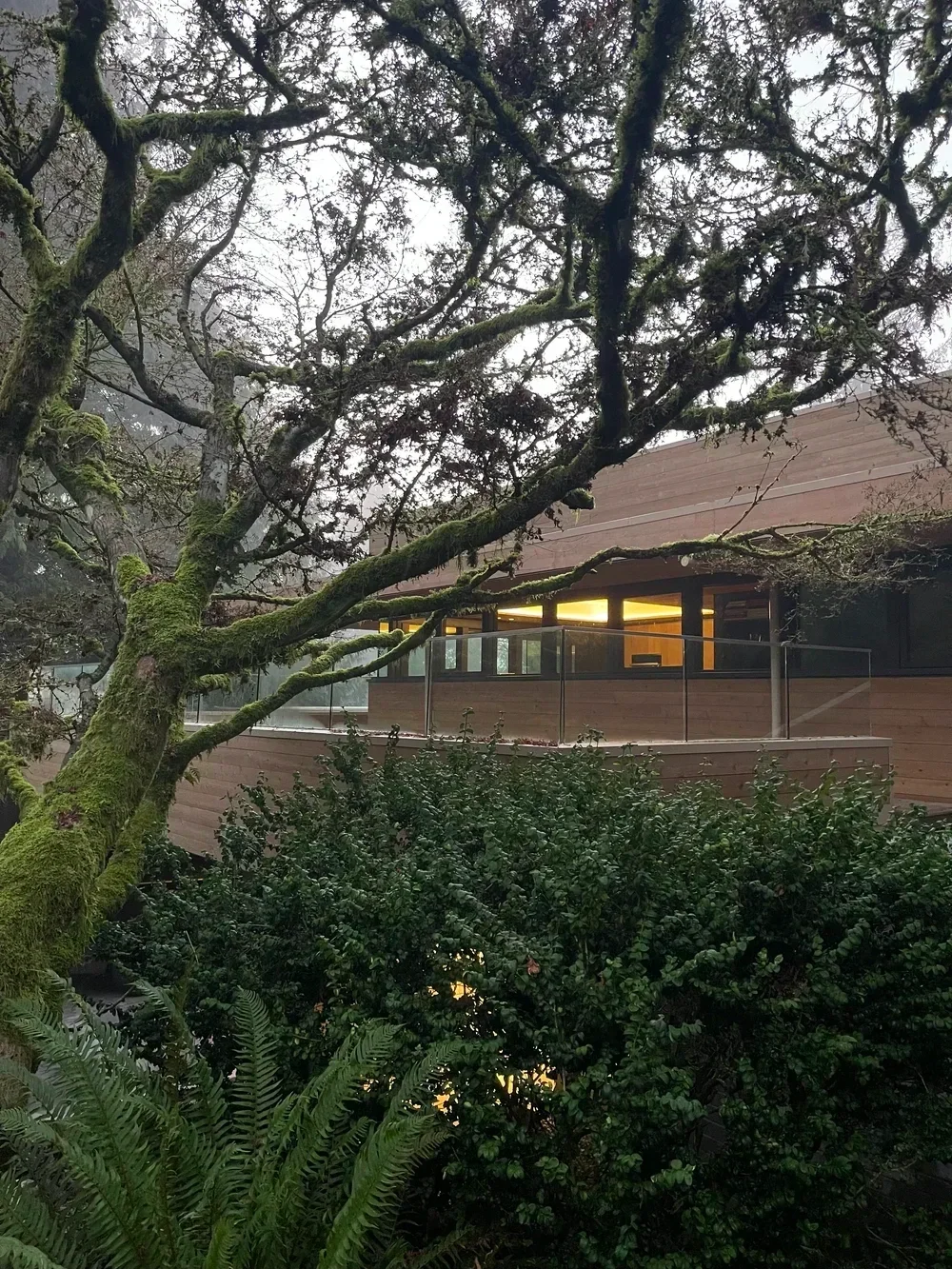
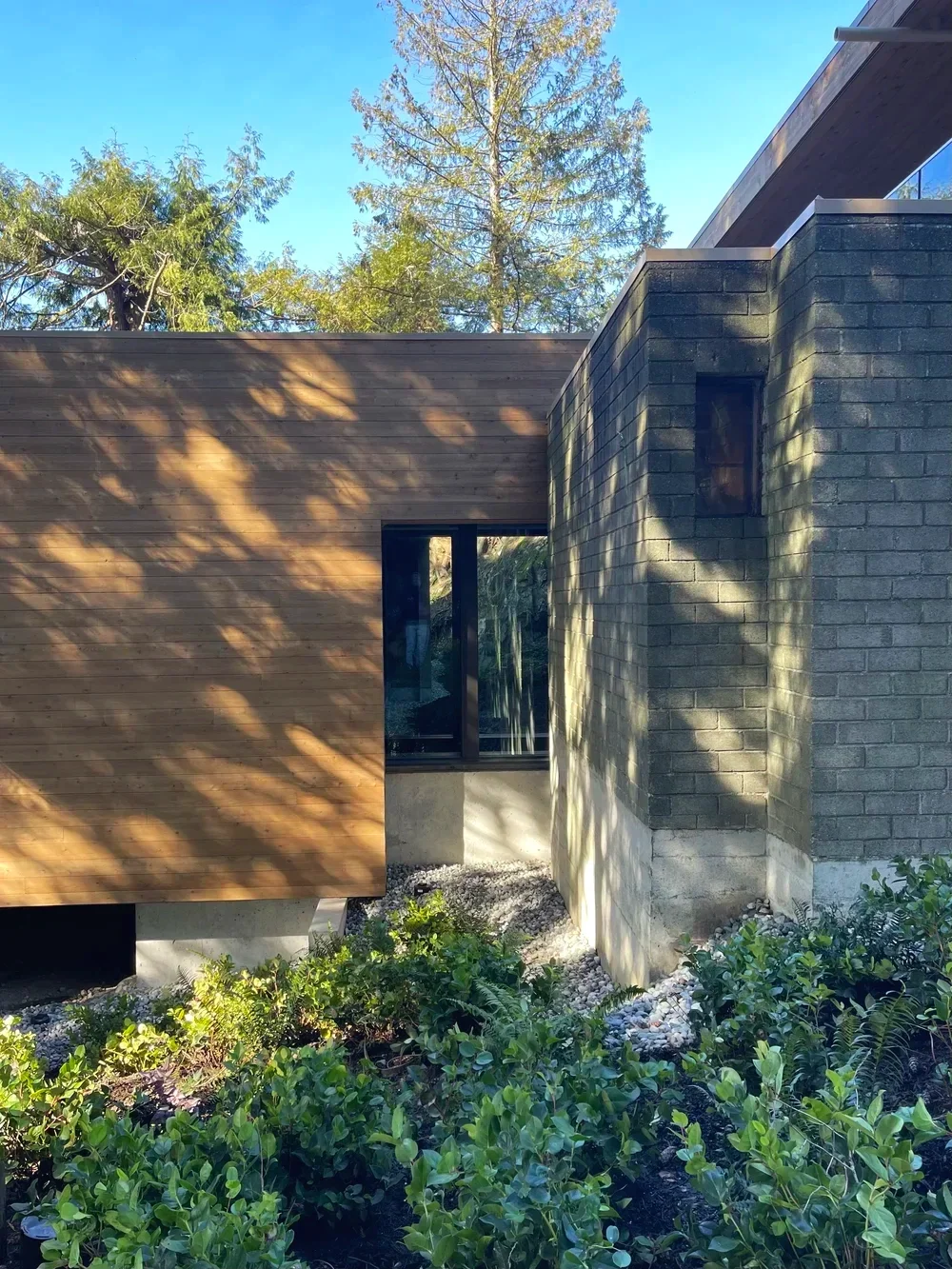
Designed in 1958 by Ron Thom, Fells House is a composed study in West Coast modernism. The residence is organized as horizontal wood volumes anchored by vertical masonry elements, with waist-height strip glazing pinwheeling around these solid masses.
Cedar cladding, deep overhangs and restrained detailing mediate light and proportion, embedding the structure within granite and forest. The architecture privileges continuity, scale and material discipline over gesture.
Fells House remains defined by its relationship to site and structure — a residence grounded in proportion and context.
RESTORATION
In collaboration with D’Arcy Jones Architects
The recent work focused on structural repair, material continuity and calibrated modernization. Deteriorated cladding and assemblies were renewed to preserve the original character and proportional clarity of the house.
Alterations introduced through a 1966 addition were recalibrated to align with Thom’s horizontal wood volumes and vertical masonry anchors. A new low-slung bedroom wing was introduced as a deferential addition, separated from the original structure to maintain hierarchy and proportional balance across the site.
The separation establishes a clear spatial threshold between volumes, allowing light and landscape to mediate the relationship between old and new. A planted courtyard reinforces this continuity, framing granite, cedar and glazing within a cohesive architectural language.
Original masonry elements, including the grey carport wall and sculptural wood-burning fireplace, were repaired and repointed. These vertical anchors continue to organize the composition, while extended glazing and restored cedar planes register shifting light throughout the day.